How to Choose Shapewear for Your Body Type
Most shapewear buying decisions are made backwards. Women walk into a shop or open a website, find a style that looks promising, and hope it works for their body.
When it does not — when it rolls, cuts in, creates new bulges, or simply does not do what it promised — the conclusion is that shapewear does not work. The actual conclusion should be that the wrong style was chosen for the wrong body.
Choosing shapewear correctly is a three-step process: identify your body type, identify your primary concern area, and match both to the right garment. This guide walks you through all three steps with a decision framework you can apply immediately.
If you want the full detailed breakdown of each body type and the best shapewear for each, see our shapewear for every body type guide. If you want to understand compression levels and fabric types before making a decision, start with our complete shapewear guide. This post is the decision framework that connects both.
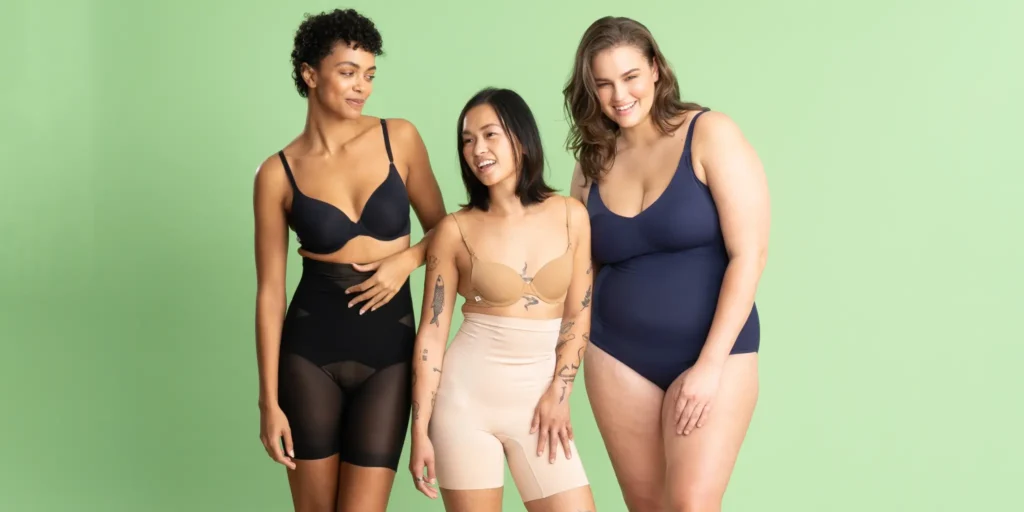
Step 1: Identify Your Body Type
Your body type is determined by the proportional relationship between your bust, waist, and hip measurements. Take all three measurements before proceeding — the framework only works with actual numbers, not approximations.
How to measure:
Bust: Around the fullest part of your chest, tape parallel to the floor, relaxed breathing.
Waist: Around the narrowest point of your torso, 1–2 inches above the navel. Do not pull tight — measure at natural relaxed state.
Hips: Around the fullest part of your hips and buttocks, typically 7–9 inches below the natural waist, tape parallel to the floor.
Now apply your measurements to the body type guide below.
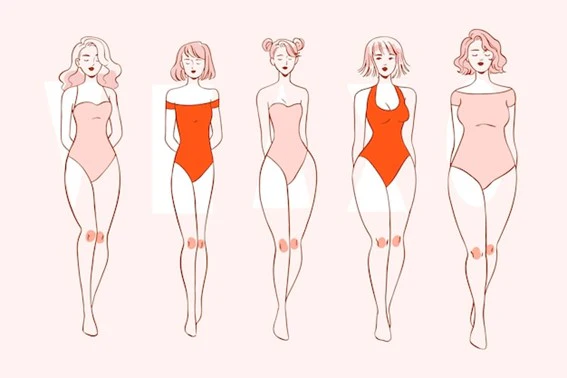
Apple Shape: Waist ≥ Hips
If your waist measurement is similar to or larger than your hip measurement, and you carry the majority of your weight in your midsection rather than your hips and thighs, you are an apple shape.
Primary shapewear need: Abdominal and waist control with long torso coverage. Go to: Best shapewear for apple shape
Pear Shape: Hips significantly larger than bust
If your hip measurement is significantly larger than your bust — typically by 5 inches or more — and your waist is relatively defined, you are a pear shape. Weight is carried primarily in the hips, thighs, and buttocks.
Primary shapewear need: Hip and thigh smoothing with graduated compression below the waist. Go to: Best rear lifting shapewear and best Spanx for bum lift
Hourglass Shape: Bust and hips roughly equal, defined waist
If your bust and hip measurements are within 1–2 inches of each other and your waist is at least 8 inches smaller than both, you are an hourglass shape.
Primary shapewear need: Light smoothing that preserves natural proportions without over-compressing. Go to: Best shapewear for bodycon dresses for occasion-specific guidance
Rectangle Shape: Bust, waist, and hips within 5 inches of each other
If all three measurements are within approximately 5 inches of each other with minimal waist definition, you are a rectangle shape.
Primary shapewear need: Waist definition and curve creation rather than smoothing alone. Go to: Best waist trainer corsets for waist definition options
Plus Size: Any of the above at extended sizing
Plus size bodies can be any of the shapes above. The primary additional consideration is garment construction — long torso length, wide waistbands, 360-degree compression, and extended sizing that was designed for larger bodies rather than scaled up from standard sizing.
Primary shapewear need: Fit quality and construction above all else.
Go to: Best plus size shapewear for tummy and best girdle for plus size
Step 2: Identify Your Primary Concern Area
Body type tells you where your body carries soft tissue. Your concern area tells you which specific zone you want to address. These two dimensions are related but not identical — a pear shape might primarily be concerned with tummy rather than hips, or an apple shape might primarily be concerned with back fat rather than the abdomen.
Work through the concern area checklist below and identify your primary one — the area that most affects how your clothing fits and how you feel in it.
Tummy and Lower Abdomen
The most common concern area across all body types. Includes the lower abdomen below the navel (tummy pooch), the upper abdomen above the navel, and general abdominal roundness.
Tummy pooch specifically (lower abdomen below navel): → Best shapewear for tummy pooch
FUPA (fatty upper pubic area — lowest abdominal zone): → Best shapewear for FUPA
Maximum tummy control — all abdominal zones: → Extreme tummy control shapewear
Plus size tummy control specifically: → Best plus size shapewear for tummy
Back Fat and Bra Bulge
Soft tissue visible around and above the bra band — across the upper back, lower back, and sides. Standard abdominal shapewear does nothing for this area because it only controls the front of the body.
Back fat and bra bulge: → Best shapewear for back fat
Muffin Top and Love Handles
Muffin top is soft tissue that sits above the waistband of trousers or jeans — caused as much by a poor-fitting waistband as by body composition. Love handles are the soft tissue at the sides of the waist and lower back.
Muffin top: → Best Spanx for muffin top
Love handles: → Spanx for love handles
Hips and Thighs
Outer thigh and hip smoothing — the area below where most briefs end. This zone is most relevant for pear shapes and anyone wearing fitted skirts or dresses where the hip-to-thigh transition is visible.
Rear lifting and thigh smoothing: → Best rear lifting shapewear
Bum lift specifically: → Best Spanx for bum lift
Waist Definition
Creating or enhancing waist definition where there is minimal natural narrowing. Most relevant for rectangle shapes and apple shapes where the waist-to-hip ratio is less pronounced.
Waist definition and cinching: → Best waist trainer corsets
Full Body Smoothing
When the goal is comprehensive smoothing across multiple zones rather than one specific area — typically for special occasions under fitted or slinky outfits.
All-in-one coverage: → Best all-in-one body shapers
Full body slimming: → Best body slimmers
Step 3: Match Body Type and Concern Area to the Right Style
Now combine your body type (Step 1) with your concern area (Step 2) to identify the right shapewear style. Use the matrix below.
| Body Type | Primary Concern | Best Style | Link |
|---|---|---|---|
| Apple | Tummy / lower abdomen | High waist brief with reinforced front panel | Best shapewear for tummy pooch |
| Apple | Back fat | Shaping camisole or bodysuit with back panels | Best shapewear for back fat |
| Apple | Muffin top | Wide-band seamless high waist brief | Best Spanx for muffin top |
| Apple | FUPA | Long-rise high waist brief or bodysuit | Best shapewear for FUPA |
| Apple | Love handles | 360-degree compression brief or cincher | Spanx for love handles |
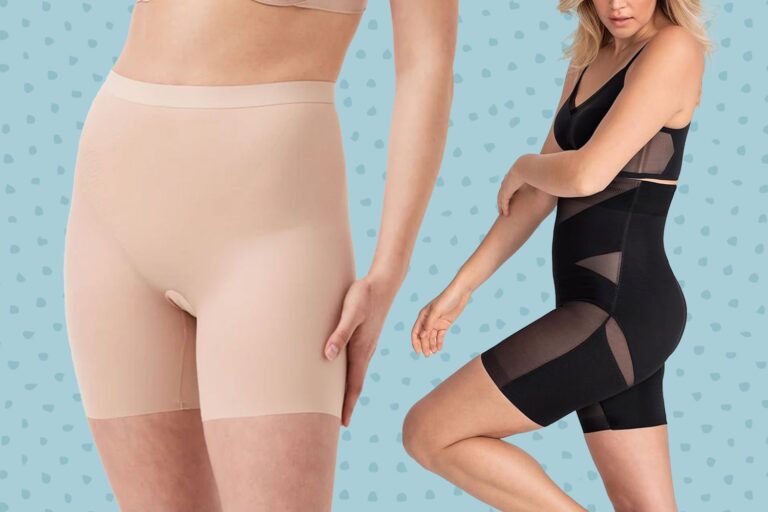
| Pear | Hip and thigh | Graduated high waist shaping shorts | Best rear lifting shapewear |
| Pear | Bum lift | Directional compression shorts or leggings | Best Spanx for bum lift |
| Pear | Tummy (secondary) | High waist brief with smooth leg opening | Best shapewear for tummy pooch |
| Hourglass | Full body smoothing | Light compression seamless bodysuit | Best shapewear for bodycon dresses |
| Hourglass | Back fat | Shaping camisole with side/back panels | Best shapewear for back fat |
| Rectangle | Waist definition | Boned waist cincher or structured bodysuit | Best waist trainer corsets |
| Rectangle | Full silhouette | Structured all-in-one with waist boning | Best all-in-one body shapers |
| Plus size | Tummy control | Long-torso high waist brief, wide waistband | Best plus size shapewear for tummy |
| Plus size | Full coverage | Plus size girdle with 360-degree compression | Best girdle for plus size |
| Plus size | Extreme tummy | Maximum compression long-torso bodysuit | Extreme tummy control shapewear |
| Any | Occasion wear | Full coverage bodysuit, firm compression | Best all-in-one body shapers |
| Any | Pregnancy | Maternity-specific light compression | Best pregnancy shapewear |
| Any | Postpartum | Postpartum wrap or abdominal binder | Best postpartum wrap |
The Four Questions to Ask Before You Buy
Once you have identified your body type and concern area, run through these four questions before finalising your choice:
1. What is the occasion? Everyday wear requires light compression and comfort. Special occasions justify firm compression for a defined period. Work requires invisibility under specific clothing. The occasion determines the compression ceiling. Full occasion guide: shapewear for every occasion.
2. How long will you be wearing it? Light compression: all day. Medium compression: 6–8 hours comfortably. Firm compression: 4–6 hours. Extra firm: 2–4 hours. Never buy firm compression for an all-day event without a plan for managing the duration.
3. What is the specific outfit? A bodycon dress needs a seamless thong-back bodysuit. A backless dress needs low-back or adhesive shapewear. Trousers need an invisible flat waistband. Sheer fabric needs nude-to-skin colouring. The outfit often determines the style more than the body type does.
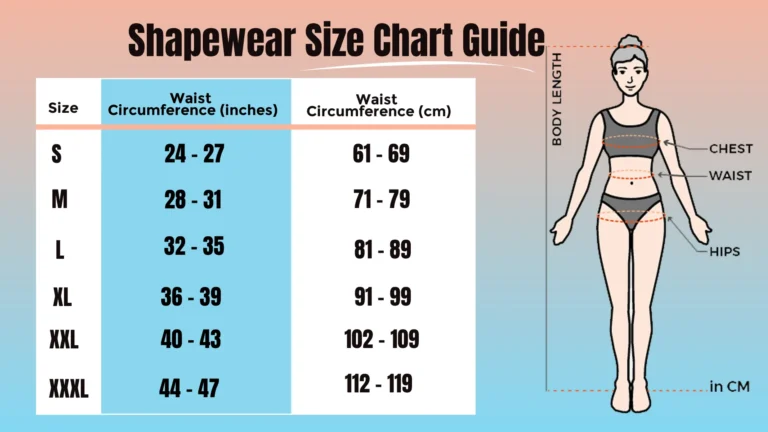
4. What is your correct size? Sizing is the most common point of failure. Use the brand’s size chart, not your clothing size. If between sizes, always size up. Never size down expecting more control — it backfires consistently. Full sizing methodology: shapewear size guide.
The Most Common Decision Mistakes
Buying for the body you want rather than the body you have. Shapewear works by smoothing the body you currently have. Choosing a style based on aspirational goals rather than current measurements leads to the wrong garment for your actual proportions.
Ignoring the occasion duration. Firm compression that is manageable for 4 hours becomes genuinely uncomfortable at hour 7. Match the compression level to the realistic duration of the event.
Choosing style before body type. Falling in love with a particular style online and buying it regardless of whether it addresses your specific concern area. Always start with the concern area and work backward to the style.
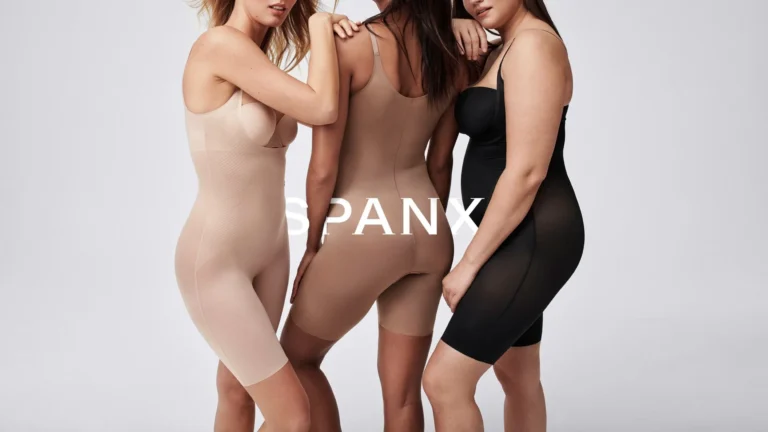
Buying the brand without checking the product. Spanx makes dozens of products at different compression levels and for different purposes. Saying “I’ll buy Spanx” is not a complete decision. Which Spanx? Full brand breakdown: complete Spanx guide.
Expecting shapewear to substitute for fit. Shapewear smooths — it does not fix a dress that does not fit. If the garment itself does not fit correctly, shapewear will not rescue it.
A Note on Brands
The best shapewear brand for your body type depends less on the brand name and more on which brand constructs the specific style you need correctly. Spanx is strong on waistband construction and muffin top control. Skims is strong on inclusive sizing and skin tone matching. Honeylove is strong on extended wear comfort. Yummie is strong on breathable everyday compression.
For an independent assessment of every major brand: best shapewear brands and Yummie Tummie vs Spanx.
Frequently Asked Questions
What if I do not fit neatly into one body type?
Most women fall between two body types rather than precisely into one. In that case, identify which body type description more closely matches your measurements and apply that framework as the primary guide.
If the concern areas overlap between two types — for example, both tummy and hip smoothing — choose a style that addresses both zones, such as a high waist shaping short which covers from the waist to mid-thigh.
Does body type change which size I need?
Body type does not change sizing — your measurements determine your size. However, body type does affect which measurement is most critical.
For apple shapes, waist and torso length are the priority measurements. For pear shapes, hip measurement is the most important. For plus size, all three measurements plus height are essential for accurate sizing. Always use the specific brand’s size chart.
Can I use this framework for postpartum bodies?
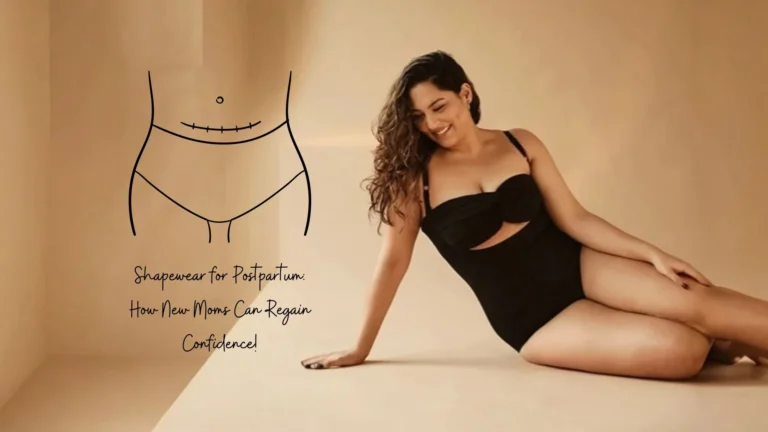
Yes, with one significant modification: postpartum bodies are in recovery, and the shapewear needs shift based on how far along the recovery is. In the first 6–8 weeks, a postpartum binder rather than cosmetic shapewear is appropriate regardless of body type.
After medical clearance, apply the body type framework above with lighter compression than you might otherwise choose. Full postpartum guidance: postpartum shapewear guide.
What if my primary concern area is not in the matrix above?
The matrix covers the most common concern areas. If your specific concern is not listed — for example, thigh chafing specifically, or postpartum c-section recovery — the dedicated guides below cover these in detail.
Start with the complete shapewear guide which covers every category including specialist use cases.
Does the decision framework work for plus size bodies?
Yes, but with additional emphasis on construction quality over compression level. For plus size bodies, a correctly fitted medium compression garment outperforms a poorly fitted firm one.
Add the plus size fit checklist to the framework: long torso, wide waistband, 360-degree compression, extended sizing engineered for larger bodies rather than scaled up.
Conclusion
The decision framework is three steps: body type, concern area, style match. When all three align, shapewear works consistently. When any one is mismatched — the wrong style for the body type, or the wrong compression level for the occasion — the result is the disappointing experience that gives shapewear an undeserved bad reputation.
Work through the steps, use the matrix, and check your size against the brand chart rather than your clothing size. The right garment for your specific body and occasion exists — this framework gets you to it.
Start with your body type guide:
- Best shapewear for apple shape
- Best plus size shapewear for tummy
- Best girdle for plus size
- Best rear lifting shapewear
- Best Spanx for bum lift
- Shapewear size guide
- Complete shapewear guide