The Ultimate Guide to Shapewear: Everything You Need to Know (2026)
You have the perfect outfit. The dress fits beautifully everywhere except for one or two spots that make you hesitate. Or maybe you have heard about shapewear but have no idea where to start — there are so many styles, compression levels, and brands that the whole thing feels overwhelming before you even begin.
This guide exists to fix that. Whether you are brand new to shapewear or have tried it before and had a bad experience, we have put together the most complete, honest, and practical shapewear guide available anywhere online. By the time you finish reading, you will know exactly what to buy, what to avoid, and how to choose shapewear that actually works for your body.
No brand bias. No fluff. Just real, useful information.
What Is Shapewear?
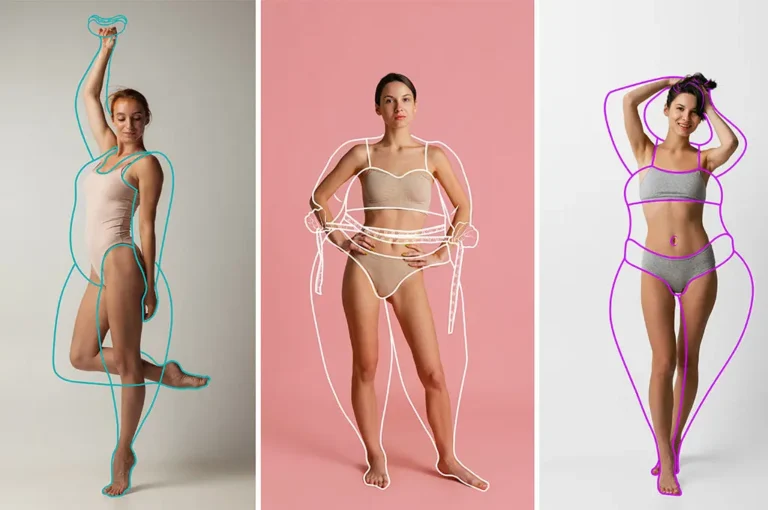
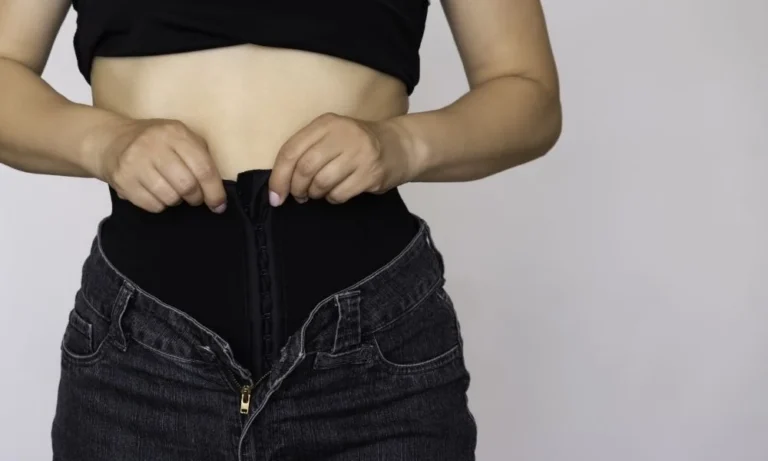
Shapewear is a category of foundation undergarment designed to compress, smooth, and reshape specific areas of the body under clothing. It works by applying targeted pressure to soft tissue — primarily around the abdomen, waist, hips, thighs, and buttocks — to create a smoother, more streamlined silhouette.
Modern shapewear is a far cry from the rigid, uncomfortable corsets and girdles of earlier decades. Today’s garments are constructed from technical fabrics — primarily blends of nylon, polyamide, and elastane (also known as spandex or Lycra) — that provide controlled compression while remaining breathable, flexible, and comfortable enough for all-day wear.
The key difference between shapewear and regular underwear is the compression element. Where standard underwear simply covers the body, shapewear actively reshapes it by distributing soft tissue more evenly, reducing the appearance of bulges, and creating definition at the waist. Some styles also offer posture support, thigh chafe prevention, and postpartum recovery benefits — making shapewear a functional garment, not just a cosmetic one.
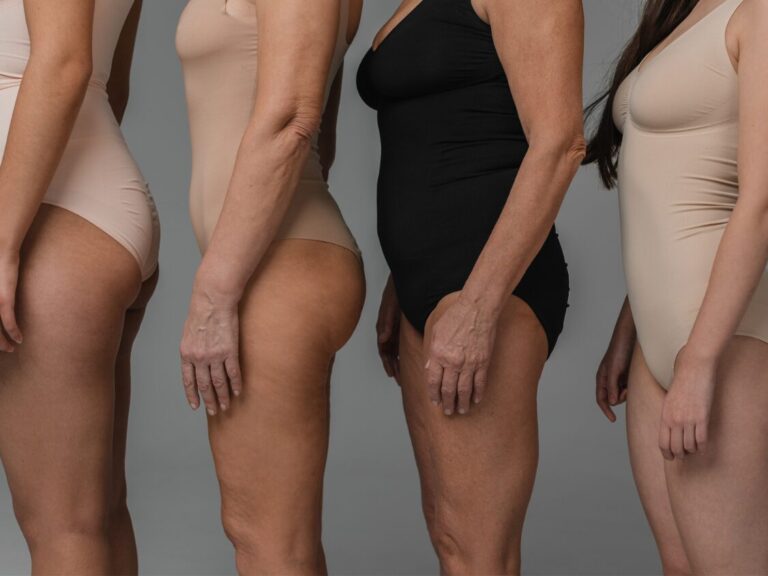
Who wears shapewear? Almost everyone, at some point. Shapewear is worn by women of all body types, sizes, and ages — from petite to plus size, from teenagers dressing for prom to women recovering from abdominal surgery. The idea that shapewear is only for people who want to look thinner is outdated. Many people wear it for comfort, to prevent chafing, to feel more confident in form-fitting clothing, or to support the body during postpartum recovery.
A Brief History: From Corsets to Compression Fabric
Understanding where shapewear comes from helps explain why the modern versions work so differently — and so much better.
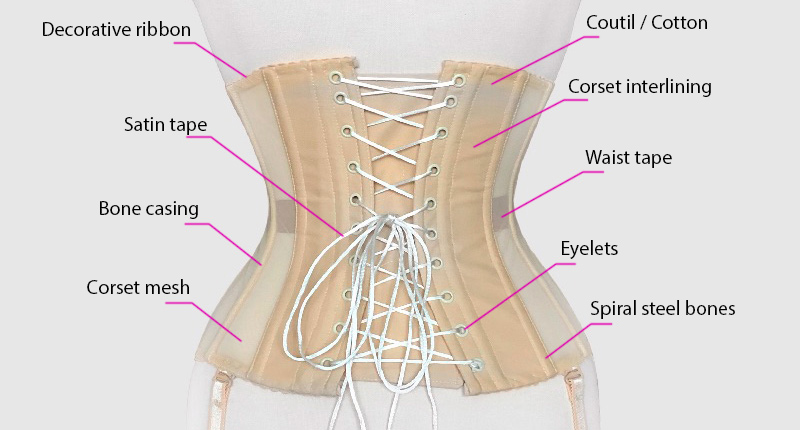
Foundation garments have existed for centuries. The corset, dating back to the 16th century, was the original body-shaping undergarment — a rigid, boned structure that dramatically altered the silhouette by compressing the waist and pushing soft tissue upward and downward. Corsets were designed to be seen as well as worn, and were considered a structural part of formal dress rather than underwear.
By the early 20th century, the girdle replaced the corset as the dominant foundation garment. Girdles used elastic and light boning to control the hips, abdomen, and thighs, and were standard undergarments for most women through the 1950s and 1960s. The decline of the girdle came in the 1970s as fashion became more relaxed and the feminist movement challenged the idea of restrictive undergarments.
Modern shapewear as we know it today was largely popularised in the 1990s when Spanx founder Sara Blakely cut the feet off a pair of control-top tights and created what became the template for the contemporary shaping brief. Since then, the category has exploded — driven by fabric innovation, body positivity conversations that reframed shapewear as a choice rather than an obligation, and celebrity endorsements that brought brands like Skims, Honeylove, and Yummie into the mainstream.
Today, shapewear is a multi-billion dollar global industry and one of the fastest-growing categories in women’s fashion.
Types of Shapewear: A Complete Breakdown
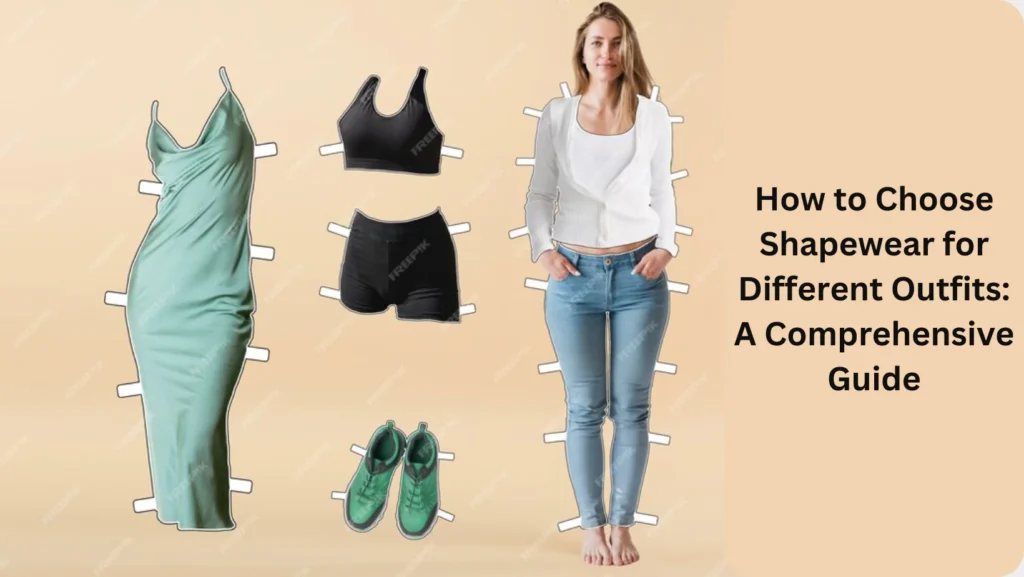
Shapewear comes in a wide range of styles, each designed to target different areas of the body. Understanding the categories is the first step to choosing the right garment for your needs.
Shaping Bodysuits
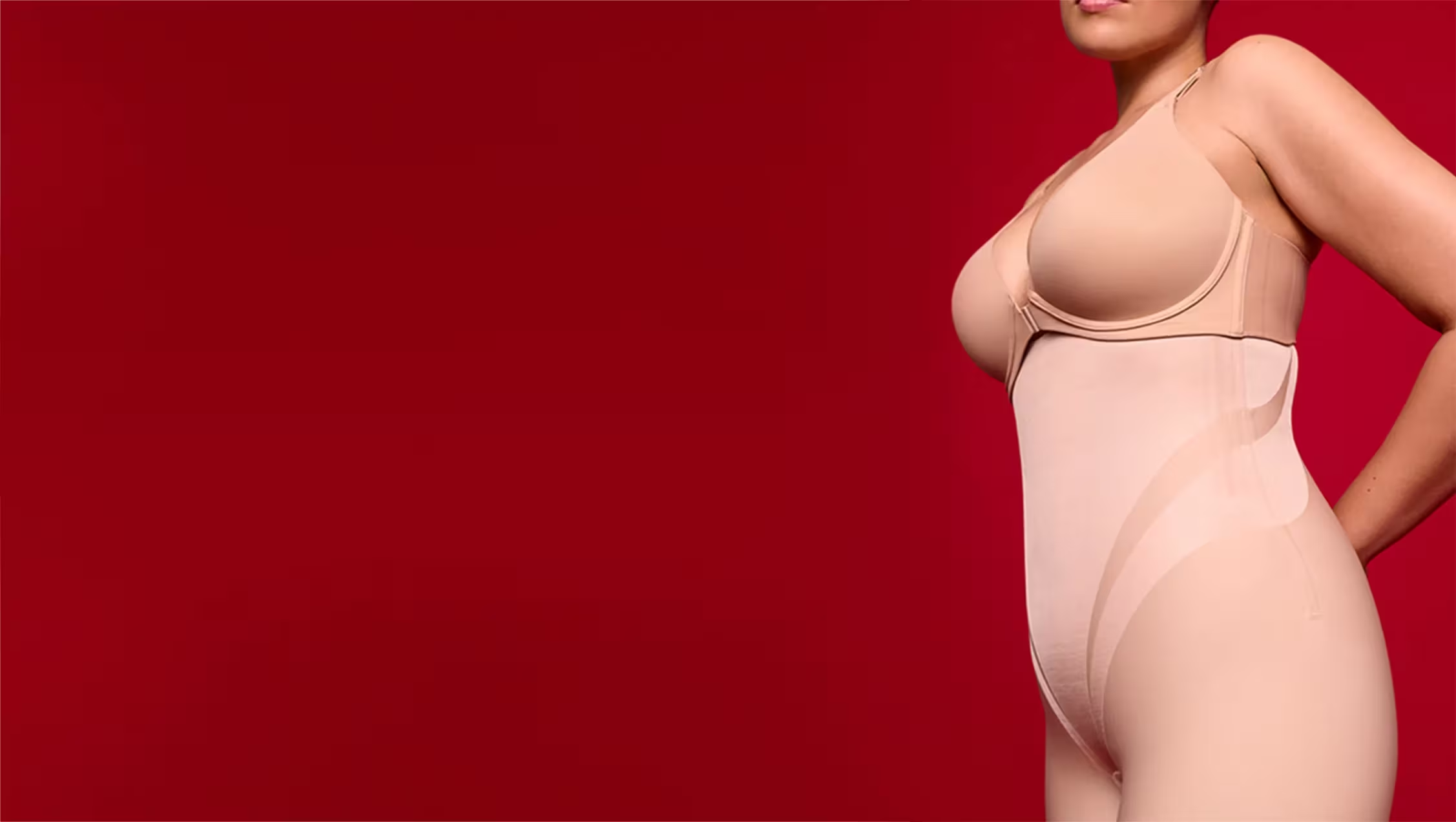
A bodysuit is a one-piece garment that covers the torso from shoulder to crotch, providing comprehensive smoothing across the entire upper body, midsection, and sometimes the thighs. Bodysuits are the most popular shapewear style for special occasions because they eliminate gaps, prevent shapewear from riding up, and create a seamless silhouette from bust to hip.
Most bodysuits have an open gusset at the crotch for ease of use in the bathroom — a feature worth checking before you buy. They come in full coverage (with built-in bra), mid coverage (bra-free), and thong back versions for dresses with sheer or thin fabric.
Bodysuits work particularly well under bodycon dresses and anything form-fitting. See our full guide to the best shapewear for bodycon dresses for our top picks.
High Waist Shaping Briefs and Panties
High waist briefs are the most versatile everyday shapewear option. They sit at or above the natural waist, targeting the tummy, hips, and upper thighs with a smooth waistband that sits flat under clothing. This style works under virtually everything — jeans, skirts, trousers, and dresses — and is comfortable enough for all-day wear at light to medium compression levels.
For women focused on tummy control specifically, a high waist brief with a reinforced shaping panel at the front is the most targeted option available. Our review of the best shapewear for tummy pooch covers the strongest options in this style.
Shaping Shorts and Bike Shorts
Shaping shorts extend coverage from the waist down to mid-thigh or the knee, making them the best option for preventing thigh chafing under dresses and skirts. They also smooth the hips, outer thighs, and buttocks more effectively than a brief alone.
The coverage length matters. Shorter styles sit at mid-thigh and work well under knee-length and midi dresses. Longer styles approaching the knee are better for slinky fabrics where every line shows.
Waist Cinchers
A waist cincher is a wide band — typically 6 to 9 inches — that sits between the ribcage and the hip bone, targeting the natural waist specifically. Unlike full-torso shapewear, a cincher does not control the abdomen below the waist or the hips below the band; its sole purpose is to define and reduce the appearance of the waistline.
Cinchers are popular under structured blazers, corset-style tops, and any outfit where waist definition is the goal rather than overall smoothing. They range from soft fabric versions with boning to rigid latex and neoprene styles used for waist training.
Waist Trainers
Waist trainers are a more intense version of the cincher, typically made from firmer materials, including latex, neoprene, or stiff fabric with steel boning. They are designed for extended wear and are often marketed as tools for reshaping the waistline over time with consistent use.
It is important to understand the distinction between short-term shaping (what a cincher does) and claimed long-term waist reduction (what waist training promises). The evidence for permanent waist reduction from waist trainers is limited. However, as a compression garment for special occasions or workouts, a well-fitted waist trainer provides firm waist control that a softer cincher cannot.
Our detailed comparison of the best waist trainer corsets covers both approaches.
All-in-One Body Shapers
An all-in-one body shaper is a comprehensive garment that combines the functions of a bodysuit, shorts, and sometimes a waist cincher into a single piece. It provides full-body smoothing from bust to thigh and is the most structured option available for special occasions.
The trade-off is comfort over extended periods — all-in-ones tend to run firmer and less breathable than single-zone shapewear. They are best reserved for events of four to six hours rather than all-day wear. See our all-in-one body shaper guide for our full breakdown.
Shaping Camisoles and Tanks
Shaping camisoles and tanks target the upper body — primarily the back, sides, and bust area — and are the most versatile shapewear style because they can be worn as outerwear as well as underneath clothing. They are ideal for smoothing back fat and bra bulge without compression below the waist.
For women concerned specifically about back fat, a shaping cami with a built-in bra and side compression panels is the most targeted option. See our guide to the best shapewear for back fat.
Shapewear Jeans and Leggings
Shapewear jeans and leggings integrate compression panels directly into the fabric of everyday bottoms, providing shaping without requiring a separate undergarment. The compression is typically lighter than dedicated shapewear, making them more comfortable for extended wear.
The best versions use strategic panelling at the waist, tummy, thighs, and seat to smooth and lift without creating visible lines under clothing. Our guide to best shapewear jeans covers the standout options.
Girdles
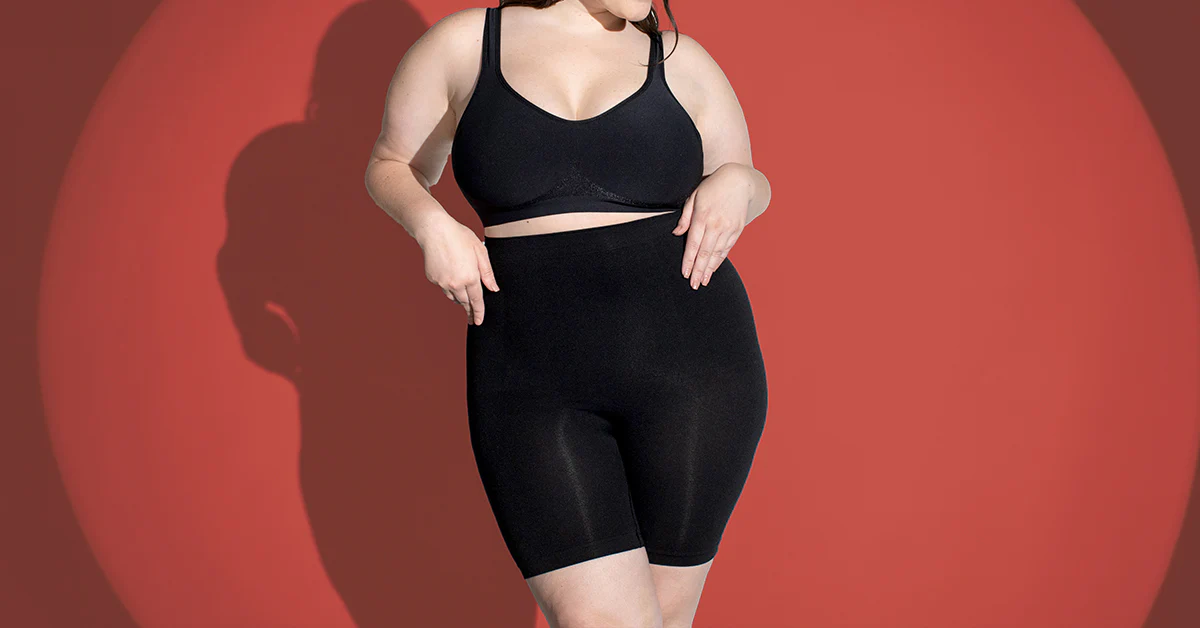
A girdle is a traditional foundation garment that controls the waist, abdomen, hips, and upper thighs in a single piece. Girdles sit between a waist cincher and full-length shaping shorts in terms of coverage, and are particularly popular among plus-size women because they provide firm, even compression across a larger area without rolling, shifting, or creating pressure points.
Modern girdles are far more comfortable than their predecessors, using elastic and stretch fabric rather than boning. Our best girdle for plus size review covers the most supportive and comfortable current options.
Postpartum and Maternity Shapewear
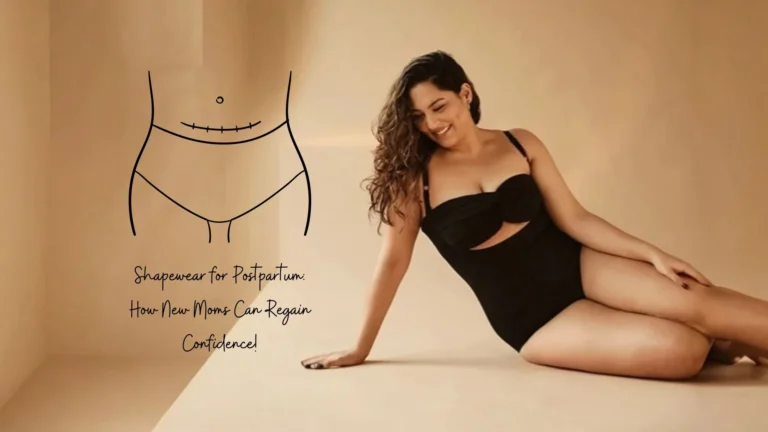
Postpartum and maternity shapewear are specially designed for the unique needs of pregnant and recently post-birth bodies. They differ from regular shapewear in that they use softer, more adjustable compression that supports the abdomen without restricting circulation or placing pressure on sensitive areas.
Maternity versions are cut specifically to accommodate a growing bump, providing gentle belly support rather than compression. Postpartum versions are designed to help the abdominal muscles and uterus return to position after birth, reduce swelling, and support the lower back during recovery.
These are medically distinct from cosmetic shapewear — the compression is gentler and the fit considerations are different. Our dedicated guides to best pregnancy shapewear and best postpartum wrap cover both in detail.
Compression Levels Explained
Compression level is the single most important specification when choosing shapewear and the one that most first-time buyers get wrong. Too light and you get no real smoothing effect. Too firm and you spend the day uncomfortable, constantly adjusting, or unable to breathe properly after a meal.
Shapewear compression is measured in mmHg (millimetres of mercury) for medical-grade garments, but most consumer shapewear uses descriptive labels — light, medium, firm, and extra firm — that refer to the tightness and pressure of the fabric against the body.
Light Compression
Light compression shapewear applies gentle, even pressure across the target area without cinching or dramatically reshaping. It feels similar to a snug pair of leggings — you are aware of it, but it does not restrict movement or breathing.
This level is ideal for everyday wear, casual outfits, and anyone new to shapewear who wants to start gradually. It smooths minor texture, reduces chafing, and adds a subtle tidied appearance under clothing without creating a dramatic silhouette change.
Best for: Everyday wear, casual clothing, new shapewear users, hot climates, sensitive skin Recommended wear time: All day
Medium Compression
Medium compression applies noticeably more pressure and begins to actively reshape the target area — flattening the tummy, nipping the waist, and smoothing the hips and thighs. It is the most versatile level and the best starting point for anyone who wants visible results rather than just subtle smoothing.
Medium compression shapewear is appropriate for work environments, social events, and any day where you want to feel put-together and confident under fitted clothing. Modern medium compression garments in technical fabrics can be worn comfortably for a full working day.
Best for: Work, evenings out, fitted clothing, all-day events Recommended wear time: 6–8 hours
Firm Compression
Firm compression creates significant reshaping — a noticeably smoother silhouette, more defined waist, and fuller control of the hips and thighs. At this level, the garment is actively working against the body’s natural contours rather than simply smoothing them, which means it requires adjustment time to get used to.
Firm compression is the standard choice for special occasions — weddings, black-tie events, formal dinners — where appearance under fitted or slinky fabric is the priority. It is not comfortable for sustained all-day wear in most cases, and eating a large meal while wearing it requires loosening clothing afterwards.
Best for: Special occasions, formal events, bodycon and slinky fabrics Recommended wear time: 4–6 hours
Extra Firm Compression
Extra firm compression is the highest level available in consumer shapewear and approaches the territory of medical-grade compression garments. It provides maximum control of the target area and is used primarily for post-surgical recovery, severe body contouring, and occasions where the maximum possible effect is required.
At this level, comfort becomes a secondary consideration. Extra firm shapewear should not be worn for extended periods without medical guidance, particularly in the postpartum or post-surgical context where compression needs to be carefully managed.
Our guide to compression garments for stomach covers post-surgical options in detail.
Best for: Post-surgery, maximum special occasion control, medical use Recommended wear time: As directed, or 2–4 hours for cosmetic use
| Compression Level | Feel | Best Use | Max Comfortable Wear |
|---|---|---|---|
| Light | Like snug leggings | Everyday, casual | All day |
| Medium | Noticeably firm, comfortable | Work, evenings, fitted clothing | 6–8 hours |
| Firm | Strong, reshaping | Special occasions, formal events | 4–6 hours |
| Extra Firm | Maximum pressure | Post-surgical, maximum contouring | 2–4 hours |
How to Choose Shapewear for Your Body Type
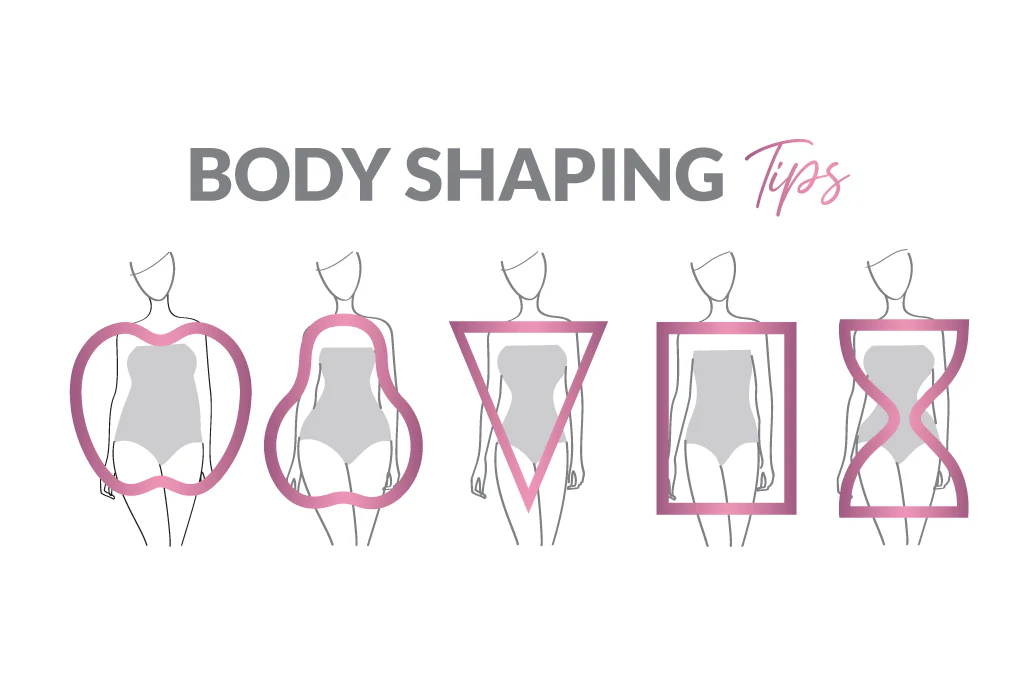
Different body shapes have different distribution of soft tissue, which means different styles and compression placements work better or worse depending on your proportions. This section maps the most common body types to the shapewear that works best for each.
Apple Body Shape
Apple-shaped bodies carry weight predominantly in the midsection — the abdomen, waist, and upper hips — with relatively slimmer legs and arms. The primary shapewear goal for apple shapes is tummy and waist smoothing rather than hip or thigh coverage.
The best shapewear for apple shapes combines a high waistband that does not cut in at the narrowest point of the midsection, a firm abdominal panel at the front, and side panels that smooth the love handle area without creating a visible line. Bodysuits with built-in waist control and high waist briefs with reinforced front panels are the most effective options.
Avoid styles with a waistband that sits at the natural waist on an apple figure — they tend to create a visible ridge. Look for wide, graduated waistbands that distribute pressure evenly.
Full recommendations in our best shapewear for apple shape guide.
Pear Body Shape
Pear shapes carry weight in the hips, thighs, and buttocks, with a narrower waist and upper body. Shapewear for pear shapes focuses on smoothing the outer thighs and hips while preserving natural waist definition rather than creating more of it.
Shaping shorts are the most useful style for pear figures — they smooth the outer thigh and hip area that sits below where most briefs end, which is often where pear figures carry the most visible soft tissue. Look for styles with graduated compression that is firmest at the outer thigh and gentler at the hip to avoid displacing tissue upward and creating a visible bump at the waistband.
Hourglass Body Shape
Hourglass figures have balanced bust and hip measurements with a noticeably narrower waist. The goal with shapewear for this body type is smoothing and definition without altering the natural proportions — which means avoiding styles that over-compress the waist and make it appear disproportionately small, or styles that add bulk to the hips.
Light to medium compression is usually sufficient for hourglass figures. Shaping briefs and camisoles that smooth without dramatically reshaping are the most flattering choice. Bodysuits with moderate compression provide comprehensive smoothing without distorting the natural silhouette.
Rectangle Body Shape
Rectangle shapes have similar bust, waist, and hip measurements with minimal natural waist definition. Shapewear for rectangle figures works in the opposite direction to most other body types — the goal is to create the appearance of curves rather than simply smooth them.
Waist cinchers and structured bodysuits with boning or firm waist panels are the most effective tools for creating waist definition on a rectangle figure. Styles with graduated compression — firmer at the waist, lighter at the hips and bust — help suggest an hourglass silhouette. Combined with butt-lifting shaping shorts, this approach creates the most dramatic transformation for this body type.
Plus Size Body Types
Plus size bodies have specific shapewear needs that standard sizing and generic compression often fail to address. The most common issues are waistbands that roll down or cut in, compression that is uneven across a larger surface area, and garments that are too short in the torso to sit at the right position on the body.
For plus size women, fit is even more critical than compression level. A well-fitted medium compression garment will outperform a poorly fitted firm one every time. Look for extended size ranges with long-line torsos, wider waistbands, and reinforced gussets.
Our detailed guides to best plus size shapewear for tummy and best girdle for plus size cover the brands that do extended sizing right.
Shapewear by Problem Area
One of the most practical ways to choose shapewear is to start with the specific area you want to address rather than the style or brand. This section maps the most commonly searched problem areas to the shapewear solutions that target them most effectively.
Tummy Pooch
The lower abdominal area below the belly button — often called the tummy pooch or lower belly pooch — is one of the most common concerns for shapewear wearers. It is particularly noticeable under fitted dresses and high-waisted trousers.
The most effective solution is a high waist brief or bodysuit with a reinforced lower abdominal panel — a denser, firmer section of fabric specifically placed below the navel to provide extra compression where it matters most. Not all high waist briefs have this feature, so checking the product description for “reinforced lower panel” or “lower tummy control” is important.
Full recommendations: best shapewear for tummy pooch.
Back Fat
Back fat — the soft tissue visible around the bra band area and across the upper and lower back — is one of the areas shapewear can address most effectively, but only if the right style is chosen. A garment that only controls the front of the body will do nothing for back fat.
Shaping camisoles and tanks with compression side and back panels are the most targeted solution. Bodysuits with full-coverage backs are also effective. Look for styles specifically described as targeting back smoothing rather than just front tummy control.
Full recommendations: best shapewear for back fat.
FUPA
FUPA (fatty upper pubic area) refers to soft tissue that sits just above the pubic bone — an area that is notoriously difficult to address because it falls below the lower edge of most standard high waist briefs.
The key to addressing this area is finding shapewear with a long-line rise that extends far enough down to cover and compress this zone. Full-coverage bodysuits with long torsos and high waist briefs designed specifically for FUPA coverage are the best options. Waist trainers that extend down to the hip are also effective.
Full recommendations: best shapewear for FUPA.
Muffin Top
Muffin top — the soft tissue that sits above the waistband of trousers or jeans — is caused primarily by waistbands that cut in at the natural waist rather than by excess body fat. The solution is shapewear with a wide, flat, graduated waistband that distributes compression evenly across the midsection rather than concentrating it at a narrow band.
Look for styles explicitly marketed for muffin top control with seamless or bonded waistbands. The Spanx range is particularly well-regarded for waistband construction.
Full recommendations: best Spanx for muffin top.
Love Handles
Love handles sit at the sides of the waist and lower back — an area that most front-panel focused shapewear misses entirely. Effective love handle coverage requires a garment with side and back panels that extend high enough on the torso to encompass this area.
High waist briefs with 360-degree compression and shaping camisoles with side boning are the most effective. Waist cinchers that wrap the full circumference of the torso also work well for this specific concern.
Full recommendations: Spanx for love handles.
Bum Lift
Shapewear designed to lift and enhance the appearance of the buttocks uses strategically placed panels that provide compression to the surrounding areas — hips, thighs, and lower back — while leaving the gluteal area itself with lighter or no compression, allowing it to appear more prominent by comparison.
Some styles use padding or built-in butt panels for a more dramatic effect. Others use directional compression to lift the underside of the buttocks without padding.
Full recommendations: best Spanx for bum lift and best rear lifting shapewear.
Shapewear by Occasion
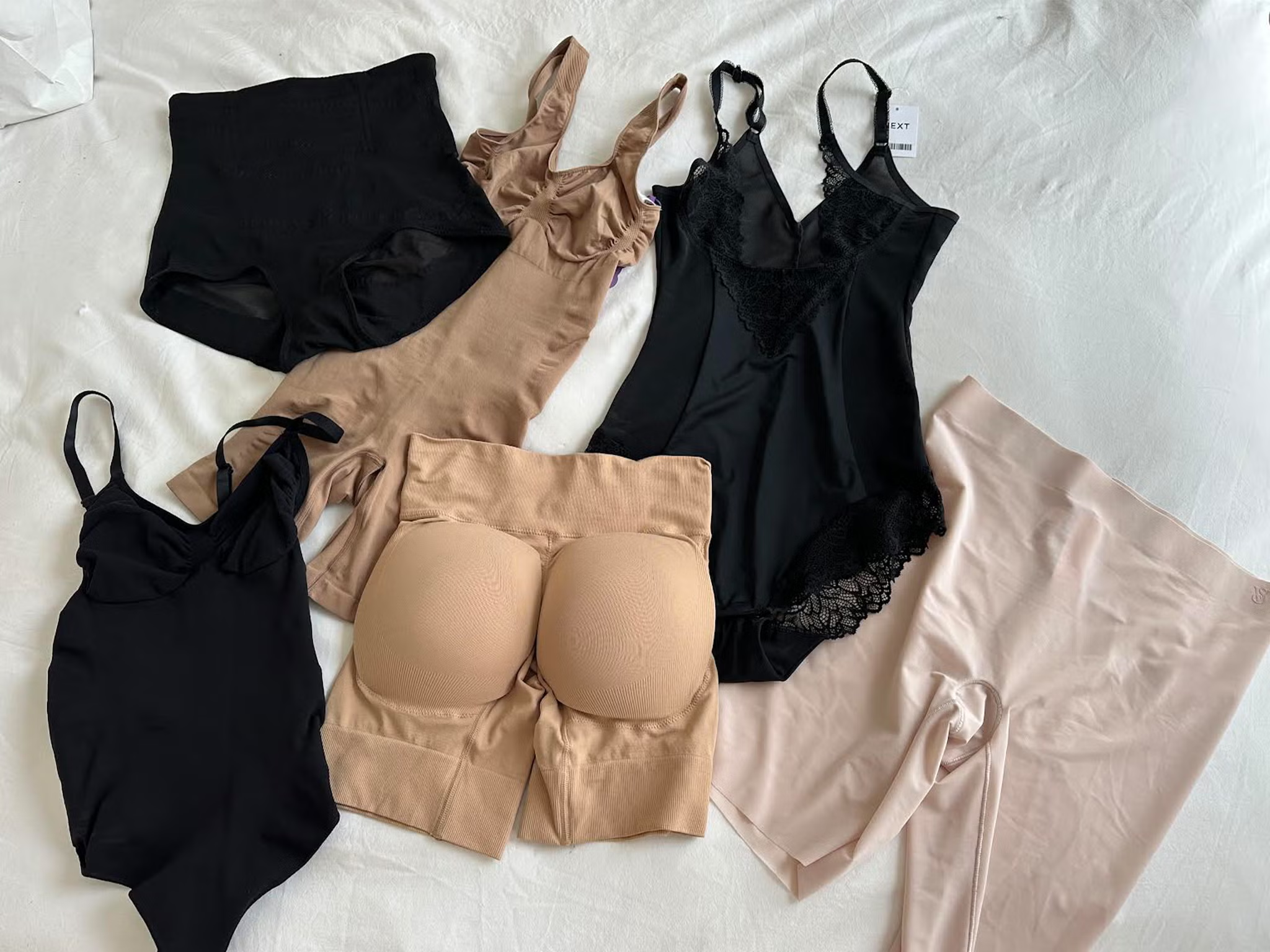
The occasion determines both the compression level you need and the style that will work best under your specific outfit.
Everyday Wear
For daily use, comfort is the priority. Light to medium compression in breathable, moisture-wicking fabrics is the right call — firm compression worn every day can cause digestive discomfort, reduced circulation in the legs, and dependency on the garment for a sense of body confidence.
Seamless, laser-cut styles in nylon-spandex blends are the most comfortable for all-day wear. Look for styles without heavy boning, rigid waistbands, or multiple hooks and clasps.
Work and Office
Medium compression in neutral, invisible colours is the standard choice for professional environments. The key consideration is that the shapewear must not be visible — no visible waistbands through trousers, no lines through office dresses, no bunching.
Smooth, seamless bodysuits and high waist briefs in nude or black work best under work clothing. Avoid styles with decorative lace edges that can create texture visible through fitted trousers.
Bodycon Dresses
Bodycon dresses are the most demanding shapewear situation because they reveal every line, texture, and edge. The shapewear must be fully invisible, seamless, and long enough to cover all areas that the dress reveals.
A full-coverage bodysuit with a thong back is usually the most effective solution, as it eliminates waistband lines and provides comprehensive smoothing from bust to thigh. See our full guide to best shapewear for bodycon dresses.
Backless Dresses and Outfits
Backless styles present a specific challenge because conventional shapewear — with its full back panels — is visible. Purpose-built backless shapewear uses adhesive, strapless, or low-back construction to provide tummy and waist control without a visible back section.
Our guide to the best options for cheap backless dress covers the most effective invisible solutions.
Pregnancy
Pregnancy shapewear is a specialised category designed to support the growing abdomen rather than compress it. The key difference from standard shapewear is that pregnancy garments use lighter, adjustable compression that accommodates changes in bump size and never places pressure on the uterus.
Benefits include reduced lower back pain, pelvic floor support, reduced leg swelling, and general comfort improvement. Maternity bands, shaping shorts with belly support panels, and maternity leggings are the main styles.
Always consult with a midwife or obstetrician before wearing any compression garment during pregnancy. See our best pregnancy shapewear guide for options designed with prenatal safety in mind.
Postpartum Recovery
The postpartum period — particularly the first 12 weeks after birth — is when targeted abdominal compression can play a meaningful role in recovery. Postpartum wraps and abdominal binders apply gentle, even pressure to the abdomen that can help reduce swelling, support weakened abdominal muscles, and provide relief from lower back pain as the body heals.
This is distinct from cosmetic shapewear. The purpose is recovery, not appearance. Our best postpartum wrap guide covers medically designed options for both vaginal and c-section births.
Post-Surgery
Post-surgical compression garments are the most medically significant category in the shapewear spectrum. After procedures including tummy tucks (abdominoplasty), liposuction, c-sections, and abdominal surgery, compression garments are typically prescribed to reduce swelling, support healing tissue, improve circulation, and maintain surgical results.
These garments are not optional lifestyle choices — they are part of the recovery protocol. Compression levels and wear schedules should be determined by your surgeon.
Our guides to compression garments for the stomach and Spanx after tummy tuck cover what to expect and which options are most appropriate.
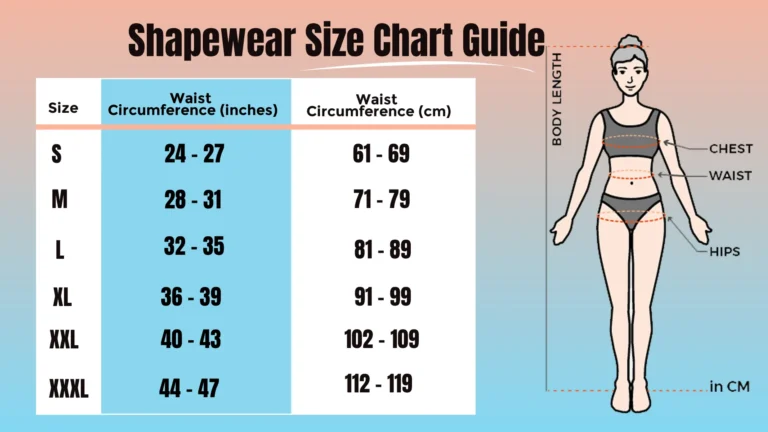
How to Find Your Shapewear Size
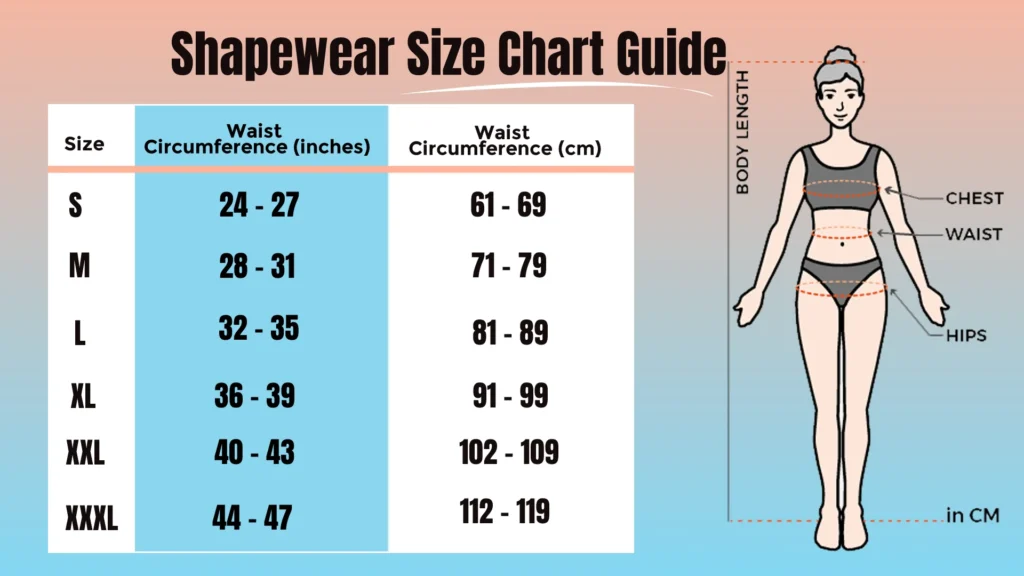
Getting the size right is the most important practical step in shapewear shopping. More shapewear disappointments come from sizing errors than from any other factor.
How to Measure Yourself
You need four measurements:
Waist: Measure at the narrowest point of your torso, usually 1–2 inches above the navel. Keep the tape measure snug but not tight.
Hips: Measure at the widest point of your hips and buttocks, usually 7–9 inches below the natural waist. Ensure the tape measure is parallel to the floor all the way around.
Underbust: For bodysuits with bra support, measure directly under the bust where a bra band would sit.
Thighs: For shaping shorts and full-length garments, measure the widest part of your upper thigh.
The Most Common Sizing Mistake
Sizing down. This is the most frequently made error in shapewear buying and the most counterproductive.
The logic seems reasonable — if medium gives me moderate control, a small will give me more control. In practice, shapewear that is too small does not compress more effectively. It creates pressure points, rolls down at the waistband, cuts into soft tissue at the thigh, and causes visible bulging above and below the compression zone — which is the exact opposite of the intended effect.
If you are between sizes, always size up. A well-fitted garment at the right size will outperform a too-small garment every single time.
Brand Sizing Variations
Shapewear sizing is not standardised. A medium in Spanx is not the same as a medium in Skims, which is not the same as a medium in a budget brand. Always check the brand’s specific size guide using your measurements rather than relying on your usual clothing size.
Spanx in particular runs small — if you are a clothing size 10-12, check their size guide rather than automatically reaching for medium.
The Best Shapewear Brands in 2026
This is an independent overview. We have no brand relationships that influence our assessments.
Spanx
The brand that defined the modern shapewear category. Spanx offers the widest range of styles across all body types and compression levels, with consistent quality in waistband construction — they are particularly strong on muffin top control and invisible waistbands. The brand runs expensive but durability is generally good, with garments maintaining compression wash after wash.
Weak points: Spanx runs small, and their extended sizing, while improved, is still not as comprehensive as some competitors. How does it compare to close competitors? See our Yummie Tummie vs Spanx comparison.
Skims
Kim Kardashian’s brand has become a genuine category leader in the five years since its launch, primarily because of its inclusive sizing (XXS to 5X) and fashion-forward aesthetic that makes shapewear pieces wearable as outerwear. Skims excels at seamless construction and skin-tone matching across a wider range of complexions than most competitors.
Weak points: Compression levels at the firmer end are not as strong as Spanx equivalents.
Honeylove
Honeylove has built a strong following among women who need comfortable shapewear for extended wear. Their garments use softer fabrics with targeted boning — a combination that provides firm support without the uncomfortable squeeze of traditional firm compression. Particularly popular for work wear and occasions that require 8+ hours in shapewear.
Maidenform
Maidenform sits at the affordable end of the market without sacrificing quality dramatically. It is widely available in department stores and offers a reliable range of everyday styles. Not the best for special occasions but excellent value for daily wear.
Yummie
Yummie is known for their SoftServe technology — a lightweight, breathable fabric with gentle compression that is particularly comfortable for all-day wear. Less dramatic shaping than Spanx at the same compression level, but significantly more comfortable. A good choice for shapewear sceptics trying the category for the first time.
Shapewear Dos and Don’ts
Do
Measure yourself before buying. Your clothing size and your shapewear size may be different. Use the brand’s size chart, not your intuition.
Match the compression level to the occasion. Light for daily wear. Medium for work and evenings. Firm for special events only.
Check the gusset construction before buying. A gusset that is fully sewn shut makes bathroom use a significant ordeal in firm compression. Look for open gussets or snap closures.
Wear cotton underwear underneath firm shapewear. This improves hygiene and comfort, particularly for all-day wear.
Try your shapewear with your actual outfit before the event. Sit down, bend over, walk up stairs. If it rolls, shifts, or cuts in during movement, it is not the right garment.
Give yourself time to adjust. New shapewear feels tighter than it will after a few wears. Wear it for a couple of hours at home before committing to it for a full event.
Don’t
Don’t size down hoping for more control. This always backfires. See the sizing section above.
Don’t wear firm compression for more than 6–8 hours regularly. Extended firm compression can impair digestion, circulation, and breathing, and should be reserved for occasions rather than daily use.
Don’t ignore fabric if you have sensitive skin. Latex and neoprene cause reactions in some people. Check the fabric content and test with a patch wear before committing.
Don’t buy shapewear that rolls down during a fitting. If it rolls down in the first 20 minutes, it will roll down at the event. Return it.
Don’t wear shapewear so tight that it creates visible bulges above or below it. This is a sign the garment is the wrong size or wrong style for your body.
Don’t assume all shapewear is the same. A $12 fast-fashion bodysuit and a $90 Spanx bodysuit are fundamentally different products. If you want real results, budget matters.
Is Shapewear Safe?
For most people wearing appropriate compression for appropriate durations, shapewear is safe. The concerns that circulate online — organ displacement, nerve damage, chronic digestive issues — are associated with extreme use: very firm garments worn for very long periods, every day, over months or years. This is not how most shapewear is designed or intended to be used.
Practical safety guidelines:
Breathing should never be restricted. If you cannot take a full, deep breath while wearing shapewear, it is too tight.
Your skin should not be marked for more than a few minutes after removal. Some light indentation is normal from waistbands, but deep red marks or painful impressions indicate the garment is too small or the compression is too firm for your body.
Tingling, numbness, or circulation changes in the legs are a signal to remove the garment immediately. This indicates the compression is impairing blood flow.
Pregnancy and post-surgical use requires medical guidance. Compression levels appropriate for cosmetic shapewear may not be appropriate for these situations. Always consult your healthcare provider.
Frequently Asked Questions
Do you wear underwear with shapewear?
This depends on the style and situation. Most shapewear with a built-in gusset is designed to be worn without underwear underneath, and adding another layer can cause bunching, visible lines, and hygiene issues. However, for all-day wear in firm compression, wearing a thin cotton underwear layer can improve comfort and hygiene. We cover this in detail in our dedicated guide to do you wear underwear with Spanx.
Does shapewear actually work?
Yes — within realistic expectations. Shapewear creates a smoother, more streamlined silhouette under clothing by redistributing soft tissue and providing surface compression. The effect is visible and can be significant, particularly at medium to firm compression levels. What shapewear cannot do is permanently alter body composition or replace the role of exercise and nutrition in long-term body shape.
Can you wear shapewear every day?
Light compression shapewear can be worn daily without significant concern. Medium compression for regular daily wear is fine for most people but worth rotating with non-compression garments. Firm and extra firm compression worn daily over extended periods is not recommended.
How long can you wear shapewear?
Light compression: all day. Medium compression: 6–8 hours comfortably. Firm compression: 4–6 hours for most people. Extra firm: 2–4 hours, or as directed for medical use.
What is the difference between a waist trainer and a waist cincher?
A waist cincher is a flexible fabric band that smooths and defines the waist. A waist trainer is a firmer, more structured garment — often with boning and latex or neoprene construction — intended for extended wear with the goal of gradually reshaping the waistline. Our best waist trainer corset guide explains the differences in detail.
How do you wash shapewear?
Most shapewear should be hand washed in cool water with mild detergent, or machine washed on a delicate cycle in a laundry bag. Never tumble dry shapewear — heat degrades the elastane fibres and destroys compression. Air dry flat or on a hanger away from direct sunlight.
What shapewear is best for plus size women?
Plus size shapewear needs to fit differently from standard sizing — look for long-line torsos, wide non-rolling waistbands, and full coverage back panels. Extended sizing from Spanx, Skims, Honeylove, and Shapellx are the most reliable. Our best plus size shapewear for tummy and best girdle for plus size guides cover the best options in detail.
Is it safe to wear shapewear while pregnant?
Maternity-specific shapewear with light, adjustable compression can be worn safely during pregnancy, but it should never compress the abdomen. Avoid standard shapewear with firm abdominal panels during pregnancy. Always check with your midwife or OB before wearing any compression garment. See our best pregnancy shapewear guide.
Can shapewear help with back pain?
Some shapewear styles — particularly waist cinchers with posture boning and high-coverage bodysuits with back support panels — do provide meaningful lower back support. This is a secondary benefit rather than a primary function, and should not substitute for medical treatment of back pain. Postpartum abdominal binders in particular are associated with reduced lower back pain during recovery.
What is the difference between Spanx and Skims?
Both are premium shapewear brands, but they approach the category differently. Spanx focuses primarily on compression performance and has a wider range of dedicated shapewear styles. Skims emphasises comfort, aesthetic design, and inclusivity in sizing and shade range, with more crossover between shapewear and everyday loungewear. The full comparison is in our Yummie Tummie vs Spanx guide, which also covers the broader premium market.
Conclusion
Shapewear in 2026 is comfortable, effective, and more inclusive than it has ever been. The right garment — chosen for your body type, your problem area, your occasion, and your correct size — can genuinely transform how you feel in an outfit. The wrong garment — too small, wrong compression level, wrong style for the problem area — will confirm every negative thing you have ever heard about shapewear.
The difference between those two outcomes is almost always information. Now you have it.
Start by identifying your primary concern — whether that is tummy smoothing, back fat, a specific outfit, or postpartum recovery — and use the sections above to narrow down the style and compression level that fits your situation. Then check our dedicated guides for each category below for our current top product recommendations.
Most popular starting points:
- Best shapewear for tummy pooch
- Best shapewear for back fat
- Best plus size shapewear for tummy
- Best shapewear for bodycon dresses
- Best postpartum wrap