Shapewear Size Guide: How to Measure and Never Get It Wrong (2026)
Sizing is the single biggest reason shapewear fails. Not compression level. Not brand. Not style. Sizing. A perfectly chosen style in the wrong size will roll down, cut in, create new bulges, and confirm every negative assumption about shapewear — when the actual problem was entirely avoidable with the right measurements and the right size chart.
This guide covers everything you need to get sizing right every time: how to measure accurately, how to interpret size charts across the major brands, what to do when you are between sizes, how sizing differs by body type, and how to identify fit problems and fix them.
If you have not yet identified your body type and the style that works for it, start with how to choose shapewear for your body type first — sizing correctly only matters after you have the right style. For foundational shapewear knowledge, see our complete shapewear guide.
Why Shapewear Sizing Is Different from Clothing Sizing
Clothing sizing and shapewear sizing are not the same system. A woman who wears a clothing size 12 might need a shapewear size Large in one brand and an X-Large in another. This inconsistency is not a flaw — it reflects the fact that shapewear sizing is based on body measurements and compression requirements rather than the more loosely standardised clothing size system.
Three specific differences make shapewear sizing harder than clothing sizing:
1. Compression amplifies fit errors. In a regular skirt, being one size too small means it is slightly tight. In shapewear, being one size too small means the waistband digs in, the compression is uneven, soft tissue is displaced upward and downward creating visible bulges, and the garment rolls down. The compression that makes shapewear effective also makes sizing errors more consequential.
2. Shapewear brands size differently from each other. Spanx runs noticeably smaller than most brands. Skims runs more true to size. Budget brands are inconsistent within their own range. You cannot apply your Spanx size to a Skims purchase or vice versa.
3. Different styles within the same brand can size differently. A Spanx Higher Power Panty and a Spanx Thinstincts brief are not the same size chart. Different constructions, different compression levels, and different fabric weights mean the same measurements can produce different sizes within a single brand’s range.
The solution to all three of these differences is the same: measure accurately and use the specific size chart for the specific product you are buying.
How to Take Your Measurements
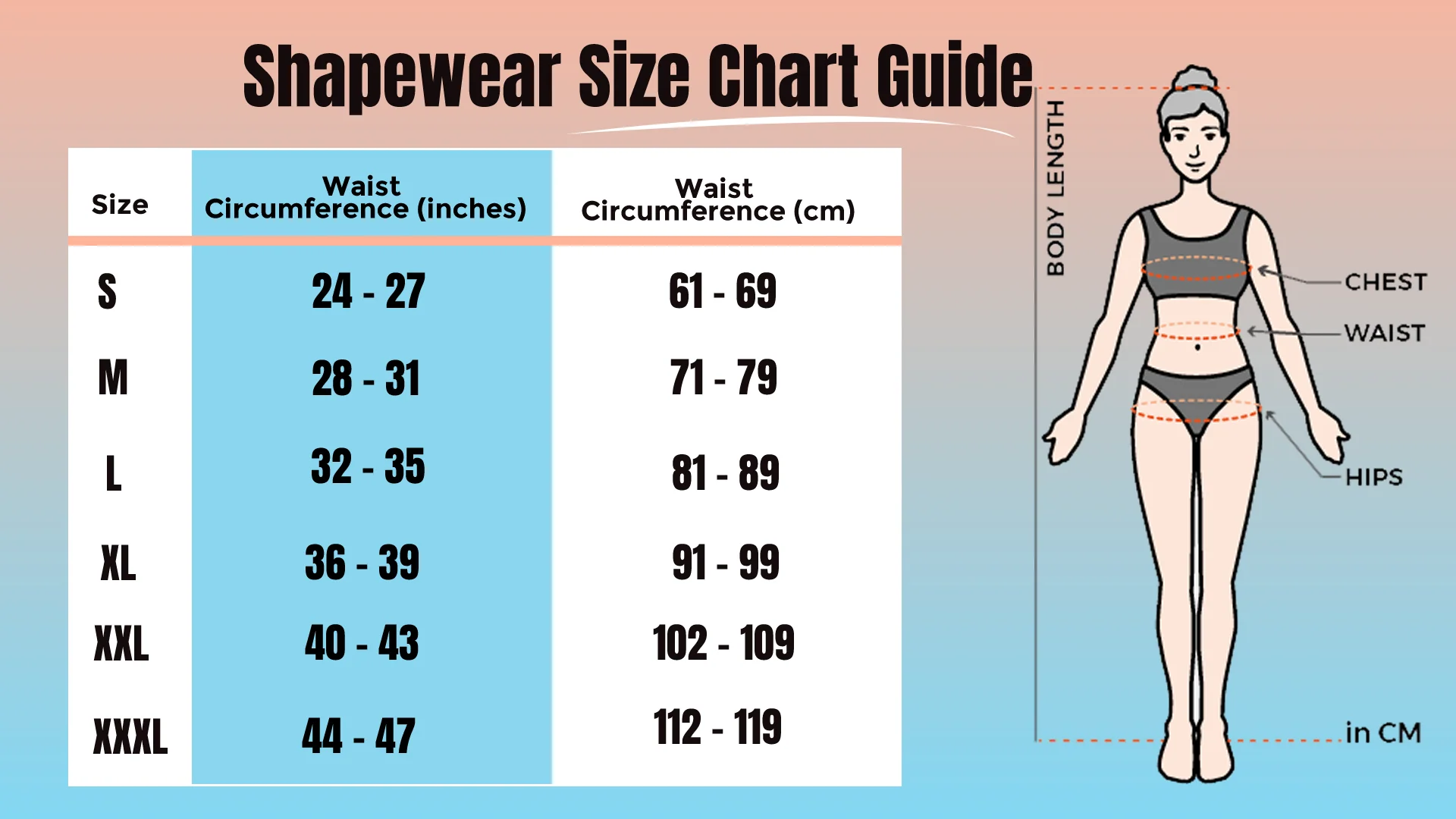
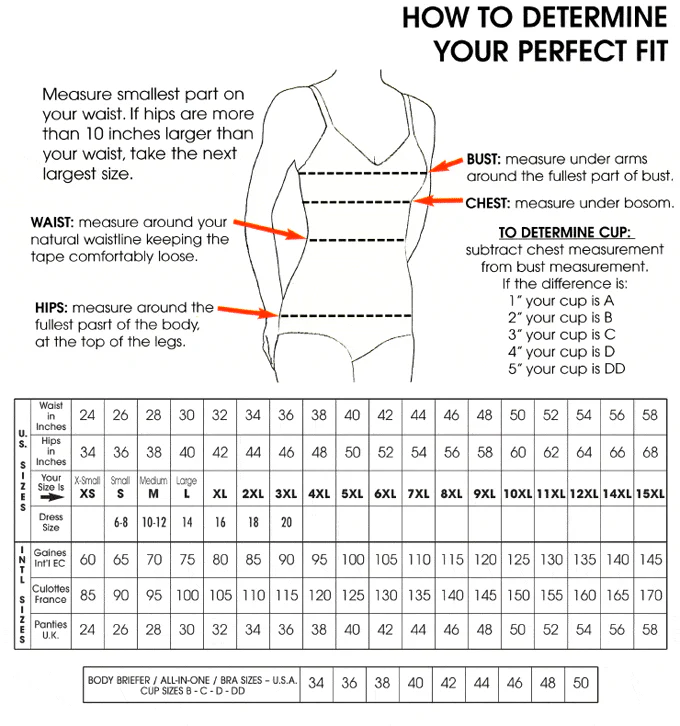
You need four measurements for comprehensive shapewear sizing. Take them in your underwear, standing naturally with relaxed posture. Use a soft measuring tape — not a rigid tape measure.
Measurement 1: Bust
Wrap the tape around the fullest part of your chest — typically across the nipple line. Keep the tape parallel to the floor all the way around. Do not pull the tape tight or let it sag at the back. Breathe normally and measure at a natural exhale.
The bust measurement is primarily used for bodysuits and garments with built-in bra support. For lower-body-only garments like briefs and shorts, the bust measurement is less critical.
Measurement 2: Waist
Find the narrowest point of your torso — typically 1–2 inches above the navel. This is your natural waist, not the waist of your jeans (which often sits below the natural waist). Wrap the tape around this point, keep it parallel to the floor, and measure without pulling tight. Do not hold your breath or pull in your stomach.
The waist measurement is the most critical for high waist briefs, cinchers, and any garment where the waistband placement is a key fit factor.
Measurement 3: Hips
Stand with your feet together and measure around the fullest part of your hips and buttocks — typically 7–9 inches below your natural waist. This is often the widest point of the lower body. Keep the tape parallel to the floor and do not compress the soft tissue.
The hip measurement is the most critical for shorts, briefs, and any garment that needs to sit smoothly across the hip and buttock area.
Measurement 4: Thighs (for shorts and full-length garments)
Measure around the widest part of your upper thigh — typically just below the gluteal fold (the crease where the buttock meets the thigh). This measurement ensures the leg opening of shaping shorts sits correctly without cutting in or creating a visible line.
How to Use a Size Chart
Most shapewear size charts map body measurements to garment sizes using one of two systems:
Weight and height system (most common for Spanx): The chart shows height ranges across the top and weight ranges down the side. Find the cell where your height and weight intersect — that is your recommended size. This system is used because it approximates the proportional relationship between body measurements more quickly than using measurements directly.
Measurement system (more precise): The chart shows waist and hip measurement ranges for each size. Find the row that matches your measurements — if your measurements fall in different size rows, take the larger size.
Which to trust when they conflict: If your weight/height suggest one size and your measurements suggest another, trust your measurements. The weight/height system is an approximation — actual measurements are more accurate. When in doubt, size up.
Brand-by-Brand Sizing Guide
Spanx Sizing
The rule: Size up one step from your clothing size as a starting point, then verify against the specific product’s size chart.
Spanx uses a weight-and-height chart for most products. The chart maps as follows for the core range:
| Spanx Size | Approximate Height | Approximate Weight |
|---|---|---|
| Small | 5’0″–5’5″ | 90–135 lbs |
| Medium | 5’0″–5’5″ | 135–165 lbs |
| Large | 5’5″–5’11” | 135–175 lbs |
| X-Large | 5’5″–5’11” | 175–205 lbs |
| 1X | 5’0″–5’5″ | 200–230 lbs |
| 2X | 5’5″–5’11” | 200–240 lbs |
Note: These are approximate ranges. Always check the specific product chart as ranges vary by product line.
Common Spanx sizing mistakes:
- Using clothing size instead of the weight/height chart
- Buying the same size across different Spanx product lines
- Assuming extended sizes (1X, 2X, 3X) follow the same proportional logic as standard sizes — they do not always
For more on Spanx sizing specifically, see our complete Spanx guide.
Skims Sizing
Skims runs more true to size than Spanx. Their size chart uses body measurements (waist and hip) rather than weight and height, which makes it more straightforward to use.
The rule: Start with your clothing size and verify against the measurement chart. For Skims, your clothing size is a more reliable starting point than it is for Spanx.
Skims also offers a significantly wider range of sizes — from XXS to 5X — with more consistent fit quality across the extended size range than most competitors.
Honeylove Sizing
Honeylove uses a measurement-based chart with waist and hip ranges. Their garments tend to run true to size or slightly generous. The boning in their garments means fit is more structured than in non-boned alternatives — the garment holds its shape rather than conforming fully to the body, which means getting the size right matters more than with softer garments.
Maidenform Sizing
Maidenform uses standard US clothing sizes with minor shapewear-specific adjustments. Their charts are simpler than Spanx’s and the sizing is more consistent with clothing sizes — making it a more forgiving brand for first-time shapewear buyers who are unsure of their shapewear size.
Budget Brands
Budget shapewear brands (under $25) have the least consistent sizing across the category. Their charts are less reliable, the garments vary more between production runs, and the sizing information on product pages is frequently inaccurate. For budget brands, read recent customer reviews specifically about sizing before buying — these are more reliable than the size chart.
Sizing by Body Type
Body type affects which measurements are most critical for getting the right size.
Apple Shapes: Prioritise Waist and Torso Length
For apple shapes, the waist measurement and the garment’s torso length are the most important fit factors. Apple shapes carry more volume in the midsection than the hip measurement alone suggests, which means a size that fits at the hips may be too tight at the waist.
Practical approach: If your waist measurement puts you in a different size than your hip measurement, take the larger size. Then check whether the brand offers a long-torso option — apple shapes frequently need additional torso length that standard sizing does not provide.
For apple shape specific recommendations: best shapewear for apple shape.
Pear Shapes: Prioritise Hip Measurement
For pear shapes, the hip measurement is the critical sizing factor. A garment sized for the waist measurement of a pear shape will typically be too small at the hip — causing the leg openings to cut into the thigh and the side panels to pull taut across the hip.
Practical approach: Size to your hip measurement first. If the waist is then slightly loose, that is preferable to the hip being tight.
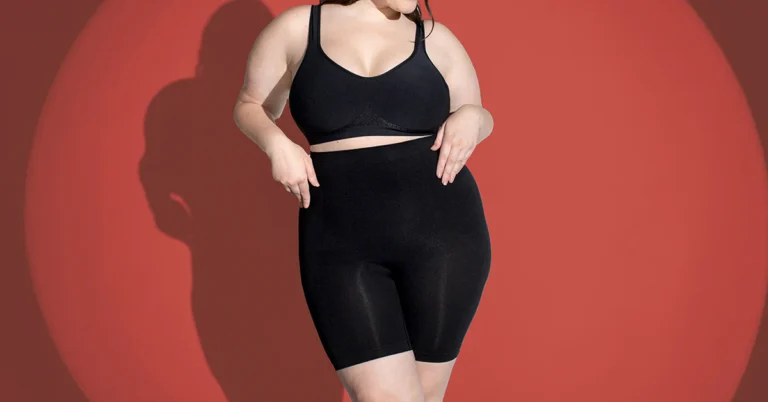
Plus Size Bodies: Prioritise Fit Quality Over Compression Level
For plus size bodies, the most important sizing principle is that a correctly fitted medium compression garment outperforms a too-small firm compression garment on every dimension — comfort, effectiveness, and wearability.
Practical approach: Use all four measurements (bust, waist, hips, thighs) and take the size indicated by the largest measurement. Check that the brand’s extended sizing includes long torso options and wide waistband construction.
For plus size specific guidance: best plus size shapewear for tummy and best girdle for plus size.
Petite Bodies: Check Torso Length
For petite women (under 5’4″), standard shapewear sizing is calibrated for taller bodies. The waistband frequently sits at the natural waist rather than below the ribcage, and bodysuits bunch at the crotch because the torso length is too long.
Practical approach: Look for brands and products that offer petite sizing specifically. If petite sizing is not available, size down from the weight/height chart recommendation and check customer reviews from petite women specifically.
The Between-Sizes Problem
Being between sizes is extremely common. Here is how to handle it for different situations:
General rule: Always size up when between sizes.
The practical reasons:
A garment that is slightly large will still provide meaningful compression — the fabric is still compressing relative to its unstretched state, just with less intensity than a perfectly fitted garment. The compression is functional, the comfort is maintained, and there are no pressure points.
A garment that is slightly too small will not provide more control — it will create pressure points, displaced tissue above and below the compression zone, rolling at the waistband, and significant discomfort. The compression becomes uneven and counterproductive.
Exceptions to the size-up rule:
If you are between sizes and the garment has boning — like a Honeylove style — the boning provides structure regardless of the fabric compression. In this case, sizing down may still provide adequate support without the drawbacks of a too-small non-boned garment. Check the brand’s specific guidance for boned styles.
If you are between sizes and the garment is a waist cincher rather than a full-coverage garment — the localised compression of a cincher is more tolerant of slightly smaller sizing than full-coverage compression, because the compression zone is smaller and the pressure is more distributed.
How to Identify a Fit Problem
If you have already bought shapewear and are not sure whether the fit is correct, check for these specific signs:
Signs the Shapewear Is Too Small
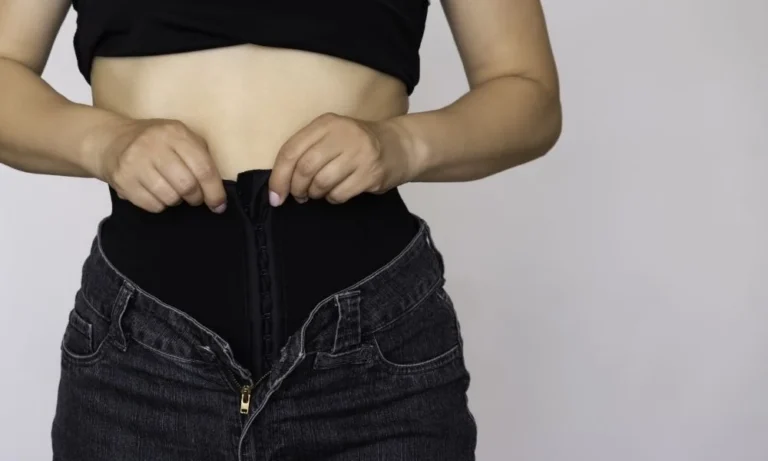
Rolling waistband. If the waistband rolls down within the first hour of wear, the garment is too small. The volume above the band exceeds the band’s resistance — it will roll every time regardless of how many times you pull it up.
Visible displacement. If soft tissue is visibly pushed above the waistband or below the leg opening — creating a new bulge where the garment ends — the garment is too small. Correctly sized shapewear should smooth, not displace.
Restricted breathing. You should be able to take a full, deep breath in any shapewear. If you cannot, the compression is too intense for your body — either the size is wrong or the compression level is too high.
Red marks lasting more than a few minutes. Some light indentation from waistbands and leg openings is normal and disappears within minutes of removal. Deep red marks, lasting impressions, or pain on removal indicate the garment is too small.
Constant adjustment. If you are pulling the garment up, adjusting the leg openings, or repositioning throughout the day, the fit is wrong. Correctly sized shapewear stays in place through normal movement.
Signs the Shapewear Is Too Large
No visible smoothing effect. If the shapewear provides no noticeable difference in how clothing sits, it may be too large — the compression is insufficient to smooth the target area.
Fabric gathering or bunching. Excess fabric that gathers at the waist or thighs indicates the garment is too large for the body.
Garment riding up. Shaping shorts that ride up the thigh throughout the day are often too large — the leg opening is wide enough to allow the garment to creep upward.
Sizing for Specific Occasions
Sizing for Everyday Wear
For everyday use, comfort takes priority alongside compression. If you are between sizes, the size-up recommendation is especially important for everyday wear — you will be in the garment for 8+ hours, and any sizing discomfort compounds significantly over that duration.
Sizing for Special Occasions
For a single special event, some women choose to size at the lower end of their range — accepting slightly more compression and slightly less comfort in exchange for a more controlled silhouette. This is a legitimate trade-off for a defined 4–6 hour period. It is not appropriate for all-day events.
Sizing for Postpartum
Postpartum sizing is complicated by the fact that body measurements change rapidly in the weeks after birth. Size at your current measurements — not your pre-pregnancy size, and not an anticipated post-recovery size. The garment needs to fit the body you currently have.
For postpartum garment guidance: postpartum shapewear guide.
Washing and Size Maintenance
Shapewear loses compression over time — this is normal and unavoidable. The rate at which compression degrades depends primarily on how the garment is washed.
To maintain compression longest:
- Hand wash in cool water with mild detergent
- Machine wash on delicate cycle in a mesh laundry bag if hand washing is not practical
- Never tumble dry — heat is the primary cause of elastane degradation
- Air dry flat or hanging, away from direct heat and sunlight
- Do not wring or twist — squeeze gently and reshape while damp
When to replace: When the waistband begins rolling consistently, when the compression noticeably decreases, or when the fabric develops permanent stretching in the compression zones. With correct washing, a quality shapewear garment should maintain effective compression for 6–12 months of regular use.
Frequently Asked Questions
Why does shapewear sizing not match my clothing size?
Shapewear sizing is based on body measurements and compression requirements rather than the standardised (but loosely applied) clothing size system. Clothing sizes have significant variation between brands and even within brands — a size 12 in one brand may fit differently to a size 12 in another. Shapewear brands use their own measurement-based charts to ensure the compression level is appropriate for the body measurement range, independent of clothing size conventions.
I am a size 14 in clothing — what size is that in Spanx?
For Spanx specifically, a clothing size 14 typically corresponds to Spanx Large or X-Large depending on your height and weight. Use the Spanx weight-and-height chart for the specific product you are buying rather than converting from clothing size. See the Spanx sizing section above and our complete Spanx guide.
Can I size down in shapewear if I want more control?
No — sizing down does not provide more control. It creates pressure points, visible tissue displacement above and below the compression zone, and significant discomfort. If you need more control than your correctly sized garment provides, move to a higher compression level within your correct size rather than sizing down. See the complete shapewear guide for compression level guidance.
My waist and hip measurements put me in different sizes — which do I choose?
Always take the larger size. Shapewear that fits at the waist but is too small at the hips will cut into the hip area and create visible lines and displacement. The waist compression is more forgiving of a slightly larger size than the hip construction is of a smaller one.
Does weight fluctuation affect shapewear sizing?
Yes — even moderate weight fluctuation (5–10 lbs) can affect how shapewear fits, particularly at the waistband. If your weight fluctuates regularly, size at the higher end of your range to ensure consistent fit across fluctuations. For significant weight changes, remeasure and recheck the size chart.
How do I measure myself accurately if I am alone?
Use a full-length mirror to check that the tape is parallel to the floor at the back. For the hip measurement specifically, place the tape at the front of your hips and reach behind to overlap the ends, checking in the mirror that the tape is not dropping at the back. Alternatively, use a flexible tape measure with a locking clasp that allows you to set the measurement before removing it.
Does shapewear size change during pregnancy?
Yes — body measurements change throughout pregnancy, and shapewear sizing needs to be updated accordingly. Standard shapewear sizing is not appropriate during pregnancy — maternity-specific shapewear with adjustable sizing that accommodates a growing bump is required. See best pregnancy shapewear and is shapewear safe during pregnancy.
Conclusion
Correct sizing is the foundation of shapewear that works. The framework is simple: take four measurements (bust, waist, hips, thighs), use the specific size chart for the specific product you are buying, size up when between sizes, and never use your clothing size as a proxy for your shapewear size.
The most common sizing mistake — buying too small — is also the most consequential. It does not provide more control. It provides less comfort, more visible problems, and a worse result than the correctly sized garment would have delivered.
Get the measurements right, use the chart, and every other aspect of choosing shapewear becomes significantly more straightforward.
Next steps: