What Is a FUPA and Can Shapewear Help?
FUPA is one of the most searched shapewear terms online — and one of the least clearly explained. Most content either defines it vaguely and moves on, or jumps straight to product recommendations without explaining why a specific type of shapewear addresses this zone rather than another. This guide does both properly: a clear explanation of what FUPA is, why it is difficult to address, and exactly which shapewear construction features target it most effectively.
For broader shapewear guidance including body types and compression levels, see our complete shapewear guide. For the full body type framework, see shapewear for every body type.
What Is FUPA?
FUPA stands for Fatty Upper Pubic Area. It refers to the accumulation of soft tissue — fat and sometimes skin laxity — in the zone directly above the pubic bone and below the lower abdomen. This area is sometimes also called the mons pubis region, the lower abdominal pouch, or the pubic mound.
The FUPA zone sits anatomically at the very lowest part of the abdomen — below where the lower abdominal muscles (the rectus abdominis) end and above the pubic bone itself. Because it sits below the muscular abdominal wall, it does not respond to core strengthening exercises in the same way that the upper or mid abdomen does. This is why many women who are otherwise fit and active find that the FUPA area persists regardless of exercise.
Why FUPA Is Different From Tummy Pooch
Tummy pooch refers to the lower abdominal area — typically the zone between the navel and the FUPA zone. It is visible as a rounded protrusion below the belly button and is more directly influenced by abdominal muscle tone and overall body composition.
FUPA sits lower — below the point where most tummy-control shapewear panels end. This anatomical distinction is critical for shapewear selection: a garment designed for tummy pooch control may provide zero coverage of the FUPA zone if the lower edge of its compression panel sits above the pubic area.
What Causes FUPA
Several factors contribute to FUPA:
Body fat distribution. The pubic area is a common site for localised fat storage, particularly in women. Hormones — especially oestrogen — influence where the body stores fat, and the lower abdominal and pubic area is one of the primary storage sites for female fat distribution.
Pregnancy and postpartum changes. Pregnancy stretches the lower abdominal wall and the skin of the pubic area. After delivery, the tissue does not always return to its previous position — the skin may be lax, the fat redistributed, and the pubic area more prominent than before pregnancy. This is one of the most common postpartum body changes.
Weight fluctuation. Significant weight loss, after which the skin does not fully retract, can leave excess skin in the pubic area that contributes to the visible FUPA even after the underlying fat has reduced.
Genetics. Fat distribution patterns are largely genetic — some women are predisposed to store fat in the pubic area regardless of overall body composition.
Age. As skin elasticity reduces with age, the pubic area tissue can become looser and more prominent.
Why Standard Shapewear Does Not Address FUPA
This is the most important practical point in the guide: the majority of shapewear garments — including most high waist briefs, most tummy control briefs, and most standard bodysuits — do not cover the FUPA zone.
Here is why. The FUPA sits at the lowest part of the abdomen — below the lower abdominal muscles and above the pubic bone. Most “high waist” briefs are designed to sit at or just below the natural waist and extend down to the upper hip area. Their compression panel — the reinforced, denser fabric that provides active control — covers the mid-abdomen and lower abdomen but typically ends well above the pubic area.
The result: the tummy pooch above is controlled, but the FUPA below protrudes past the lower edge of the compression panel. In fitted clothing this lower protrusion is often more visible than the tummy pooch would have been without shapewear.
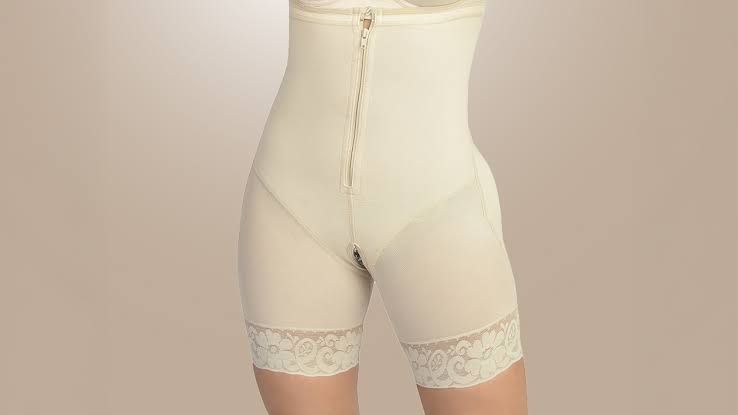
The solution is not just a higher compression level — it is a garment with sufficient rise (the distance from the leg opening to the waistband) to cover the FUPA zone, and a compression panel that extends all the way down to the pubic area rather than ending at the mid-lower abdomen.
What to Look For in FUPA-Targeting Shapewear
Long Rise Construction
Rise refers to the measurement from the crotch seam to the waistband — the length of the front of the garment. Standard high waist briefs have a rise of approximately 10–13 inches. FUPA-covering garments need a rise of at least 13–15 inches to extend far enough down to cover the pubic area comprehensively.
When reading product descriptions, look for terms like “full rise,” “extra high waist,” “long torso,” or “extended rise.” If the rise measurement is not specified, check customer reviews specifically from women mentioning FUPA coverage — this is the most reliable indicator of whether the garment covers this zone.
Low-Cut Compression Panel
The compression panel must extend all the way to the crotch seam — not end several inches above it. Some garments have a reinforced compression panel in the mid-section with lighter fabric at the very bottom of the brief. For FUPA coverage, the firmer fabric must extend to the lowest point of the garment.
Full-Length Bodysuits
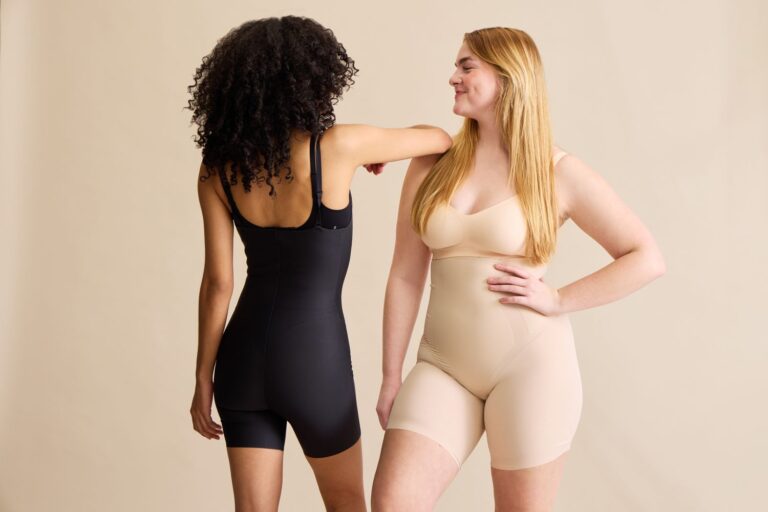
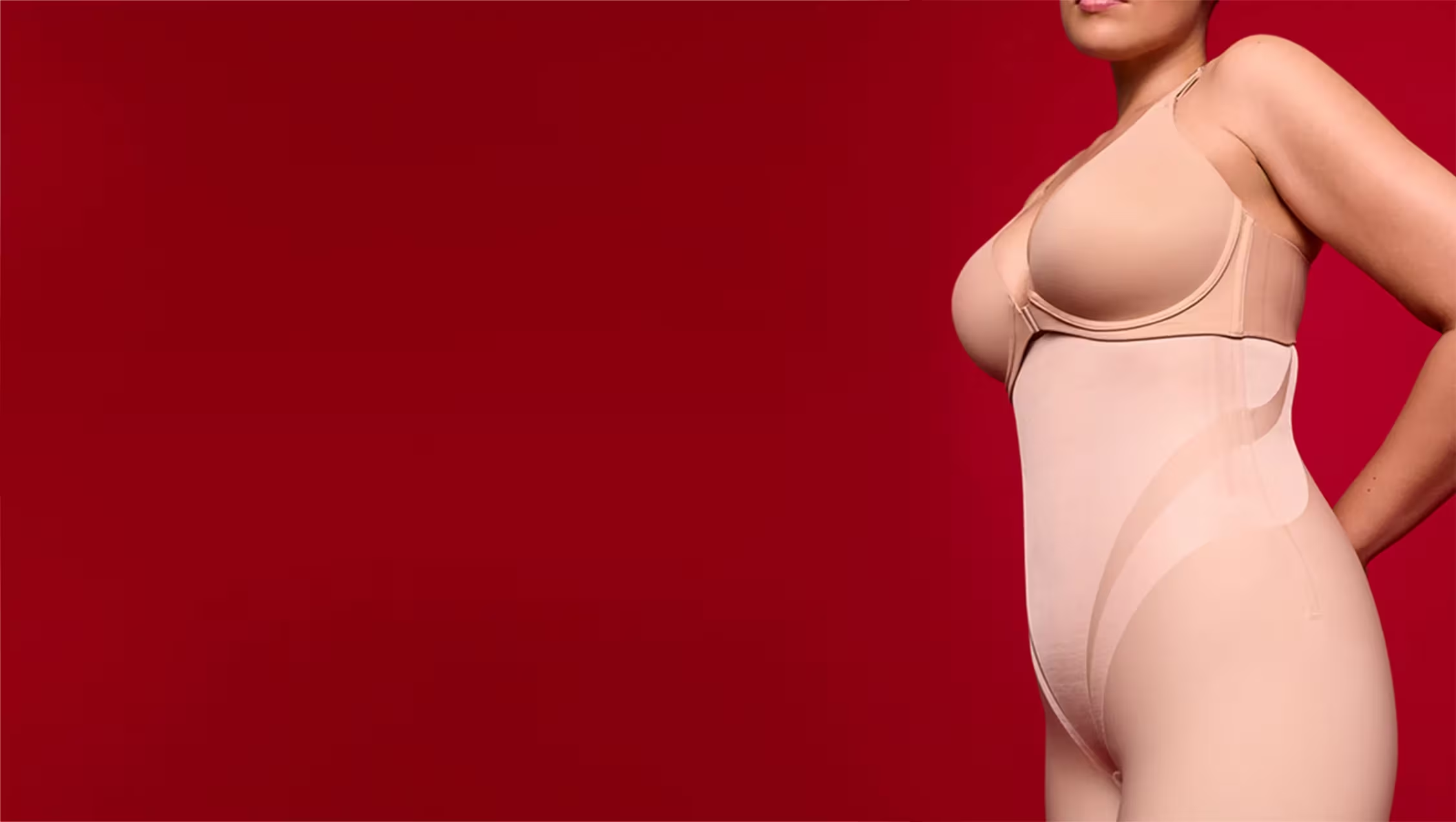
Full-length bodysuits — garments that cover the entire torso from shoulder to crotch — inherently cover the FUPA zone because the garment extends to the crotch seam by design. The compression in the lower section of a bodysuit provides continuous coverage from the waist all the way down, eliminating the gap between compression panel and pubic area that causes the problem with shorter garments.
For special occasions, a well-constructed bodysuit is the most reliable FUPA-covering solution because coverage is guaranteed by construction rather than dependent on rise measurement.
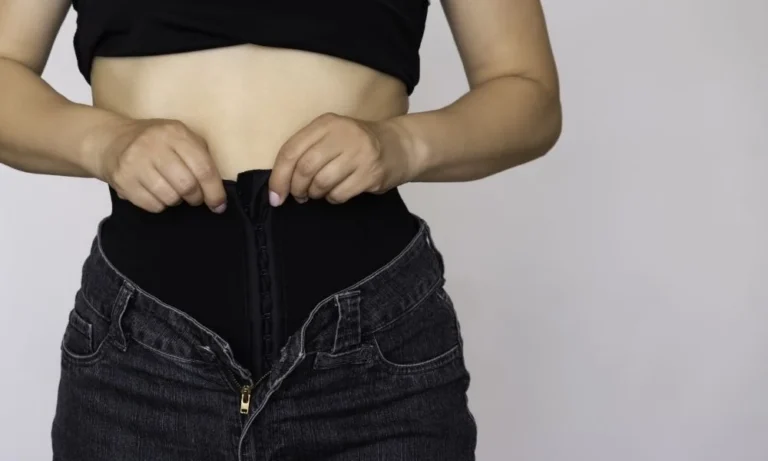
Waist Trainers That Extend to the Hip
Waist trainers that are cut long — extending from the ribcage to the hip rather than just around the natural waist — can provide some coverage of the upper FUPA area when combined with a standard brief. The lower edge of the trainer sits at approximately the pubic area on most body types, providing compression at the zone where standard briefs leave off.
This combination approach — a long-line waist trainer over a standard high waist brief — is more complex to wear but addresses both the waist (cincher) and the FUPA (lower edge of cincher) simultaneously.
FUPA and Body Type
FUPA is most commonly associated with plus size bodies, postpartum bodies, and apple shapes — but it occurs across all body types and sizes. The shapewear approach differs slightly depending on the overall body context.
Apple Shapes and FUPA
Apple shapes carry weight primarily in the midsection, which means FUPA is common alongside tummy pooch and love handles. The most effective solution for apple shapes with FUPA is a long-rise full-coverage bodysuit that addresses all three zones simultaneously — tummy, love handles, and FUPA — in a single garment.
See best shapewear for apple shape for body-type-specific recommendations.
Plus Size Bodies and FUPA
For plus size bodies, FUPA coverage requires the same long-rise, extended-compression-panel construction as for standard sizes — but the garment also needs to meet plus size construction requirements: wide waistbands, long torsos, and 360-degree compression.
Standard-size long-rise garments do not automatically provide adequate FUPA coverage for plus size bodies if the torso length is insufficient. Plus size-specific options are necessary.
See best plus size shapewear for tummy for options that address both tummy and FUPA in extended sizing.
Postpartum Bodies and FUPA
Postpartum FUPA is particularly common and often persists beyond the general postpartum recovery period. In the early postpartum phase, compression in the pubic area should be gentle — the tissue is still healing. As recovery progresses, cosmetic shapewear with FUPA coverage becomes appropriate.
For postpartum-specific guidance including timing and appropriate compression levels: postpartum shapewear guide.
FUPA vs Tummy Pooch: Choosing the Right Garment
Since FUPA and tummy pooch are adjacent zones that are often confused, here is the practical distinction for shapewear selection:
If your primary concern is the lower abdomen between navel and FUPA zone (tummy pooch): A standard high waist brief with a reinforced front panel addresses this zone. See best shapewear for tummy pooch.
If your primary concern is the zone below the lower abdomen and above the pubic bone (FUPA specifically): You need a long-rise garment or full-length bodysuit with a compression panel that extends to the crotch. See best shapewear for FUPA.
If both zones are a concern simultaneously: A full-length bodysuit or a long-rise extended-compression brief covers both. For maximum control across the entire abdominal zone from navel to pubic area: extreme tummy control shapewear.
Can Shapewear Permanently Reduce FUPA?
No. Shapewear provides temporary compression that reduces the visible appearance of FUPA while the garment is worn. It does not reduce fat, tighten skin, or alter body composition in any lasting way. The FUPA returns to its natural state when the shapewear is removed.
Claims that waist trainers or compression garments permanently reduce the FUPA through sustained wear are not supported by credible evidence for the vast majority of users. Permanent reduction of FUPA requires either significant overall fat loss (which may reduce FUPA as part of overall body composition change) or surgical intervention (liposuction, monsplasty, or abdominoplasty with pubic lift).
Shapewear is a cosmetic tool for specific occasions and outfits — it is not a treatment for FUPA and should not be used as one.
Clothing Choices That Reduce the Visible Effect of FUPA
Alongside shapewear, clothing choices significantly affect how visible the FUPA area is.
High-waisted styles — trousers, skirts, and jeans that sit at or above the natural waist — cover the FUPA zone directly with fabric rather than requiring shapewear to address it. A well-fitted high-waisted trouser in a structured fabric is one of the most effective FUPA-minimising clothing choices.
A-line and flared skirts — these silhouettes skim over the lower abdomen and FUPA area rather than conforming to it, providing visual distraction without requiring shapewear.
Avoid low-rise styles — trousers or jeans that sit below the natural waist not only expose the FUPA zone but actively push the tissue upward over the waistband, creating a more pronounced effect.
Structured fabrics over clingy ones — ponte, scuba, thick crepe, and medium-weight denim sit away from the body rather than conforming to it. Thin jersey, satin, and stretch fabrics reveal every contour.
Longer tops and tunics — tops that extend below the hip cover the FUPA zone entirely, making shapewear unnecessary for casual clothing combinations.
Frequently Asked Questions
What is the difference between FUPA and a tummy pooch?
A tummy pooch is the rounded protrusion of the lower abdomen between the navel and the FUPA zone — typically addressed by standard tummy-control shapewear. FUPA is the soft tissue in the zone directly above the pubic bone, below where most tummy-control shapewear panels end. The two zones are adjacent and often coexist, but they require different shapewear construction to address. See best shapewear for tummy pooch and best shapewear for FUPA for the respective solutions.
Why does shapewear make my FUPA look worse?
If shapewear makes the FUPA area appear more prominent, the garment’s compression panel is ending above the FUPA zone and pushing soft tissue downward into the uncovered area. The fix is a garment with a longer rise or a full-length bodysuit that covers the pubic area. Never size down in an attempt to get more coverage — this worsens displacement. Use a correctly sized long-rise garment instead.
Can losing weight get rid of FUPA?
General fat loss can reduce FUPA as part of overall body composition change, since fat in the pubic area responds to overall caloric deficit over time. However, the pubic area is often one of the last places the body loses fat due to hormonal fat distribution patterns. Postpartum FUPA with a significant skin laxity component may not fully resolve with fat loss alone.
Is FUPA the same as diastasis recti?
No. Diastasis recti is a separation of the abdominal muscles that causes the abdomen to protrude, particularly in the mid and lower abdominal area. FUPA is adipose tissue in the pubic area. They can coexist — particularly postpartum — and both contribute to lower abdominal protrusion, but they are anatomically distinct conditions with different solutions.
What exercises reduce FUPA?
Since FUPA is primarily adipose tissue rather than a muscular issue, exercise reduces it through overall fat loss rather than targeted spot reduction — which is not physiologically possible. Cardiovascular exercise for overall fat loss, combined with lower abdominal strengthening for the overlying tummy pooch, is the most effective exercise approach. For the skin laxity component of postpartum FUPA, pelvic floor physiotherapy is more directly relevant than exercise targeting the abdominal muscles.
Is FUPA more common after pregnancy?
Yes, significantly. Pregnancy stretches the lower abdominal wall and the skin of the pubic area. After delivery, particularly after multiple pregnancies or c-section births, the tissue in the FUPA zone may not return to its previous position. Postpartum FUPA is one of the most common lasting body changes after pregnancy and is not indicative of inadequate recovery or fitness.
Conclusion
FUPA is a specific anatomical zone with specific shapewear requirements. Most shapewear does not address it because most shapewear is not designed to cover the pubic area — the compression panels end too high. The solution is long-rise garments, full-length bodysuits, or extended-compression briefs with panels that extend to the crotch seam.
Understanding this anatomical distinction before buying shapewear saves significant frustration — and ensures the garment you choose actually addresses the zone you are concerned about.
For specific product recommendations:
- Best shapewear for FUPA — dedicated FUPA coverage guide
- Best shapewear for tummy pooch — if tummy pooch is the primary concern
- Extreme tummy control shapewear — maximum coverage across both zones
- Best plus size shapewear for tummy — extended sizing with FUPA coverage
- Postpartum shapewear guide — for postpartum FUPA specifically
- Complete shapewear guide — full foundational reference